Sunday, February 7, 2016

Organizing Targeted Instruction


In recent years, there has been a lot of push for educators to use a tiered approach to instruction.  What does that look like in your classroom?  How do you give each student the instruction that they need both academically and socially?

It can be extremely difficult to individualize and group instruction in a way that is effective for ALL students. Especially when you are feeling short on resources, time and staff.  But it doesn't have to be as tough as it seems.  It is all about being creative and strategic, as you create your space, organize your staff, and plan your schedule!

Let's start by creating a space.  You want the space to be small with limited distractions so students can focus on the skills you are working on. 


It is important that you organize the space in away that the students can attend to instruction and not other activity that is happening around the room. 


You also want to organize the space in away that the students know how much work they have to do.  For example, for math and literacy small groups on the floor, I have used these visual work systems that I put in clear plastic frames and then marked off each step as we completed it with a dry erase marker. 


The visual systems matched the space as I organized a fabric box system accordingly.  The students knew finished was when they completed all three fabric boxes for their subject area.   


So how do the individualized and small group spaces fit into the flow of the classroom, what are other students, and staff doing while you teach targeted small group or individualized one on one instruction?  In my situation, the other students are participating in free play that is facilitated by my staff while I pull specific students to work on the skills they need more practice with. 


The beauty is that every student gets what they need!  Some students joined me for small group at the beginning of free play and others joined me for a small group at the end of free play.  

Between each group I finish my data collection and organize the space for the next group. Data collection is a vital piece in knowing which students need what, so you can make data-based decisions and continue to provide meaningful instruction through targeted small groups or on an individual basis depending on what the students need. 

To learn more about delivering  various types of instruction in organized ways click the following links:

Social Small Group
Math Small Group
Literacy Small Group
Direct Instruction

Until next time, best wishes!
Lindy


Thursday, February 4, 2016

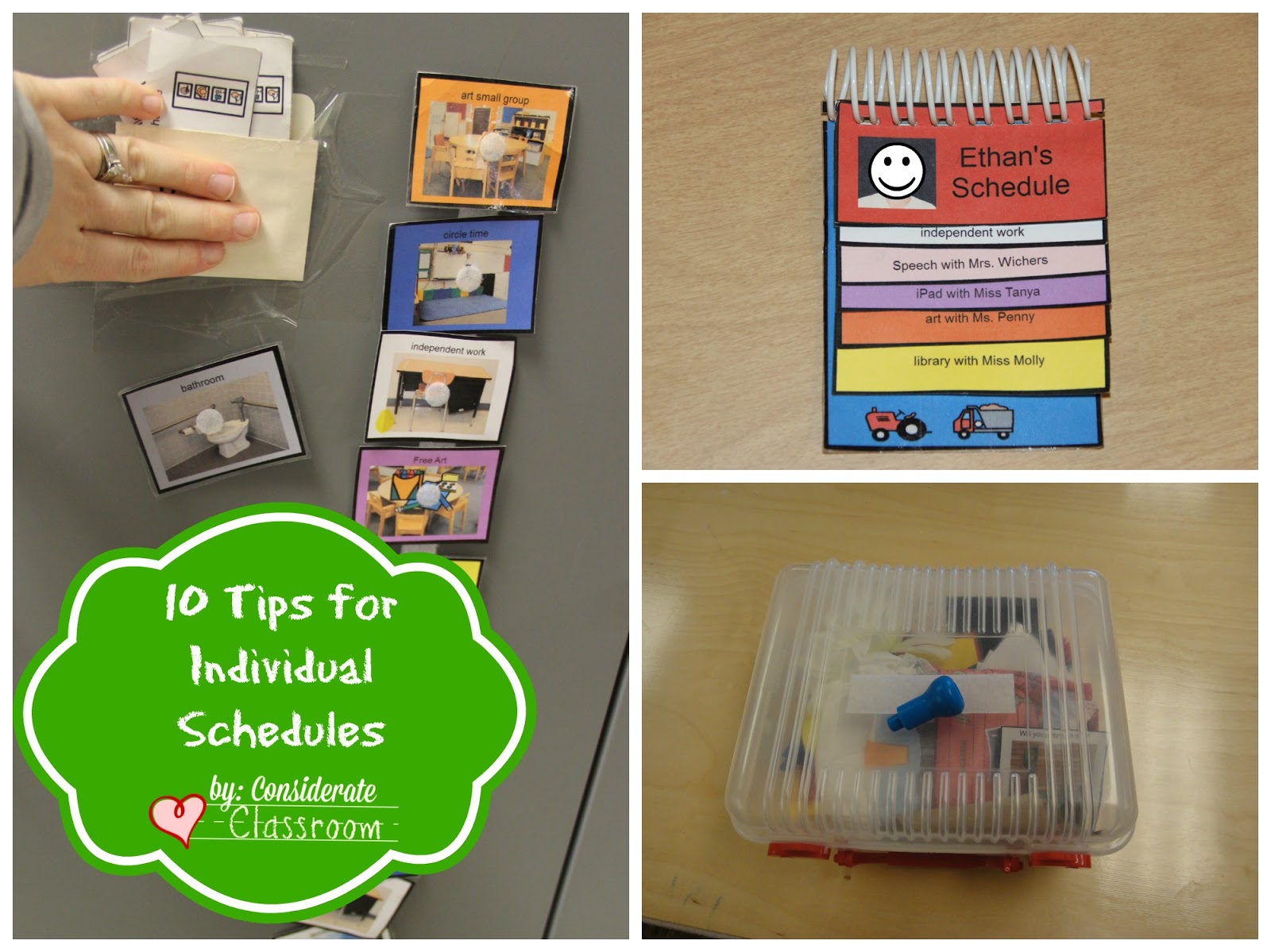
10 Tips for Implementing Effective Individual Schedule


As promised, today I will be adding to my last post Demystifying the Use of an Individual Schedule with 10 Tips for Implementing Effective Individual Schedules.  

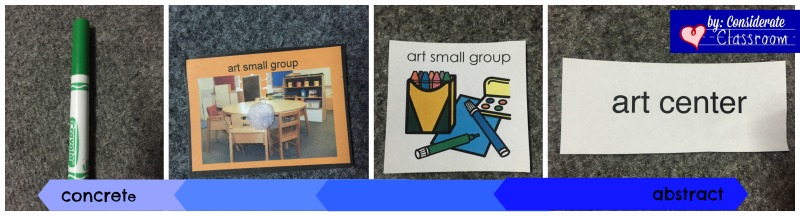
1. Use transition items that are meaningful to each individual student-  For example, if a student is at a concrete level than objects maybe most meaningful to them, where as a student with strong literacy skills may be able to use a schedule with icons or words. 


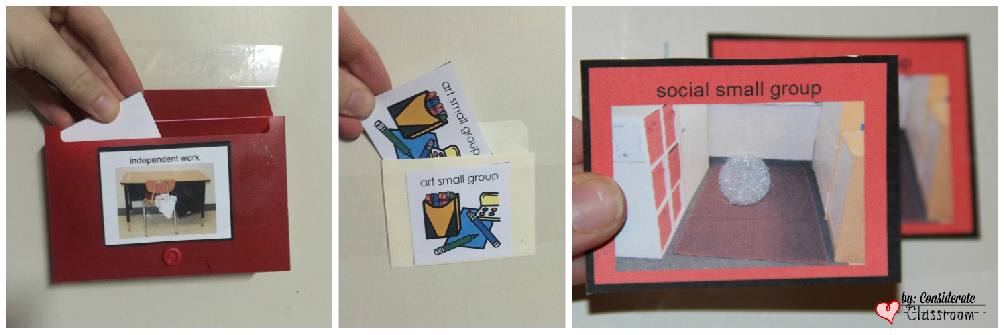
2. Have a place for students to match their transition items-  For example, they may stick their icon in a library pocket, plastic recipe box or match it up with Velcro.   The medium you choose is not as important as the routine itself.  By having a place to put transition items, students transition with purpose.  They know they have to transition to the matching space in the classroom which supports success and eliminates behavior because they know the expectation. 


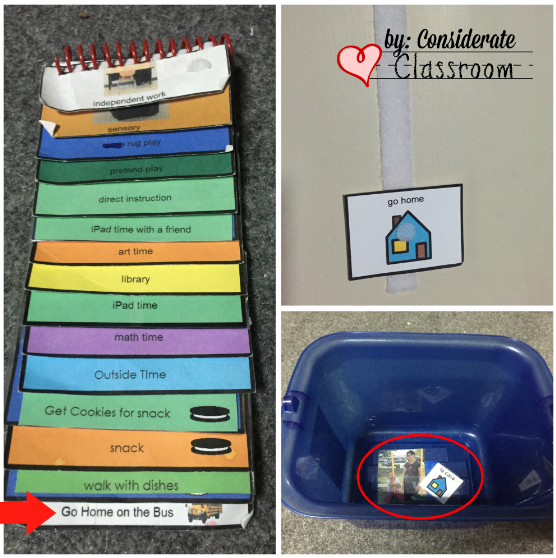
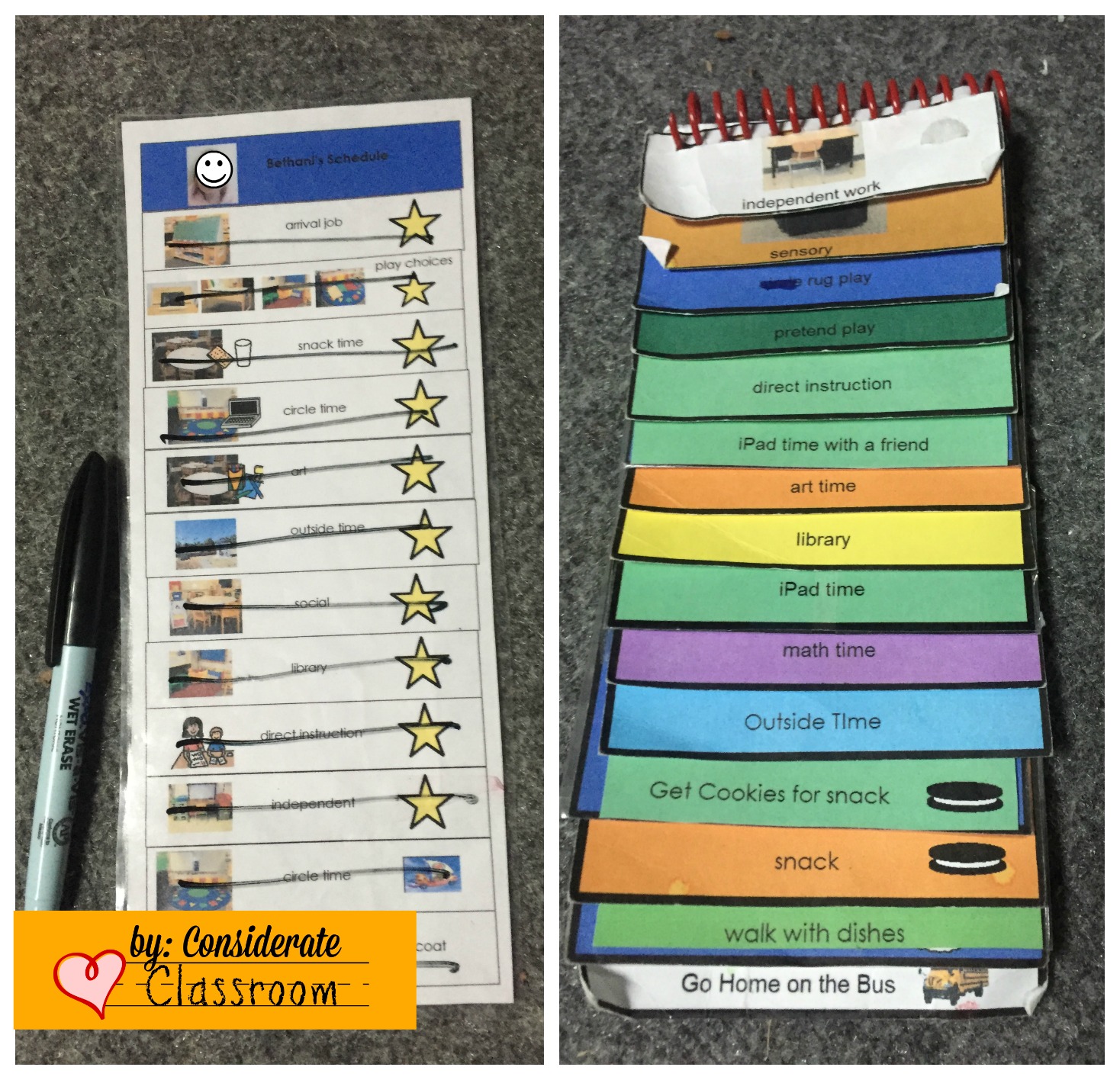
3. Help students know when finished is-  For example, finished is when all the icons have been matched and the only one left is the home icon, or the student has flipped to the last page of their flip schedule which has a bus on it and is the longest page in the schedule to help the student realize they are getting closer to finished with each page flip.  Finished with an object schedule might be when all the objects are gone from an object schedule basket and the only thing left is a picture of mom and a house at the bottom of the basket.  Knowing when finished is and seeing themselves getting closer and closer to finished reduces student anxiety as they can visually see when their school day will be over. 


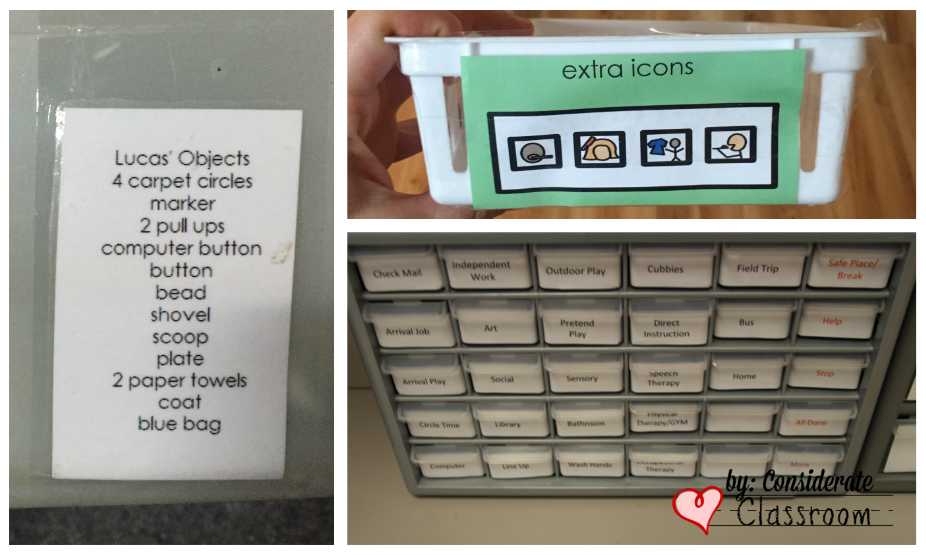
4. Make the schedules easy to re-assemble-  Nothing is worse than having to put schedules together at the end of a busy day when the schedules take 30 minutes to set up for the following day.  In our classroom, we had extra icons and photos in a draw system as well as an extra icon bin that staff could put used icons or icons that were inevitably laying around the classroom in to be re-used on schedules at the end of the day or sorted back into the drawer system.  We also attached lists by or on student schedules that were helpful to refer to throughout the day and when reassembling schedules at the end of the day. 


5. Keep schedules simple- If the student doesn't need a match to match schedule, and they can make sense of it, use a schedule where you can simply mark items off or flip the page so you don't have to re-assemble the schedule each day after school.   


6. If needed use student strengths and interests-  For example, I had a kiddo in my class one year that was a very concrete thinker but an object schedule just wasn't speaking to her.  Although we had places for her to place each object, she couldn't grasp what we were expecting her to do with the objects.  She would throw them, or drop them on the floor even after several weeks of training and modeling.  Puzzles were a strength for this little gal.  They made sense to her so we used two piece wood puzzles for her objects to match.  One piece of the puzzle was mounted in the area she was transitioning to and the other was in her schedule book bag that she wore for sensory input from one activity to the next.  It became a listening activity for her, as staff would direct her to get the next piece out of her book bag and match up.  It was perfect she understood the concept of matching up immediately when the objects were switched to the two piece puzzles.   She become independent with transitions and following directions!

  
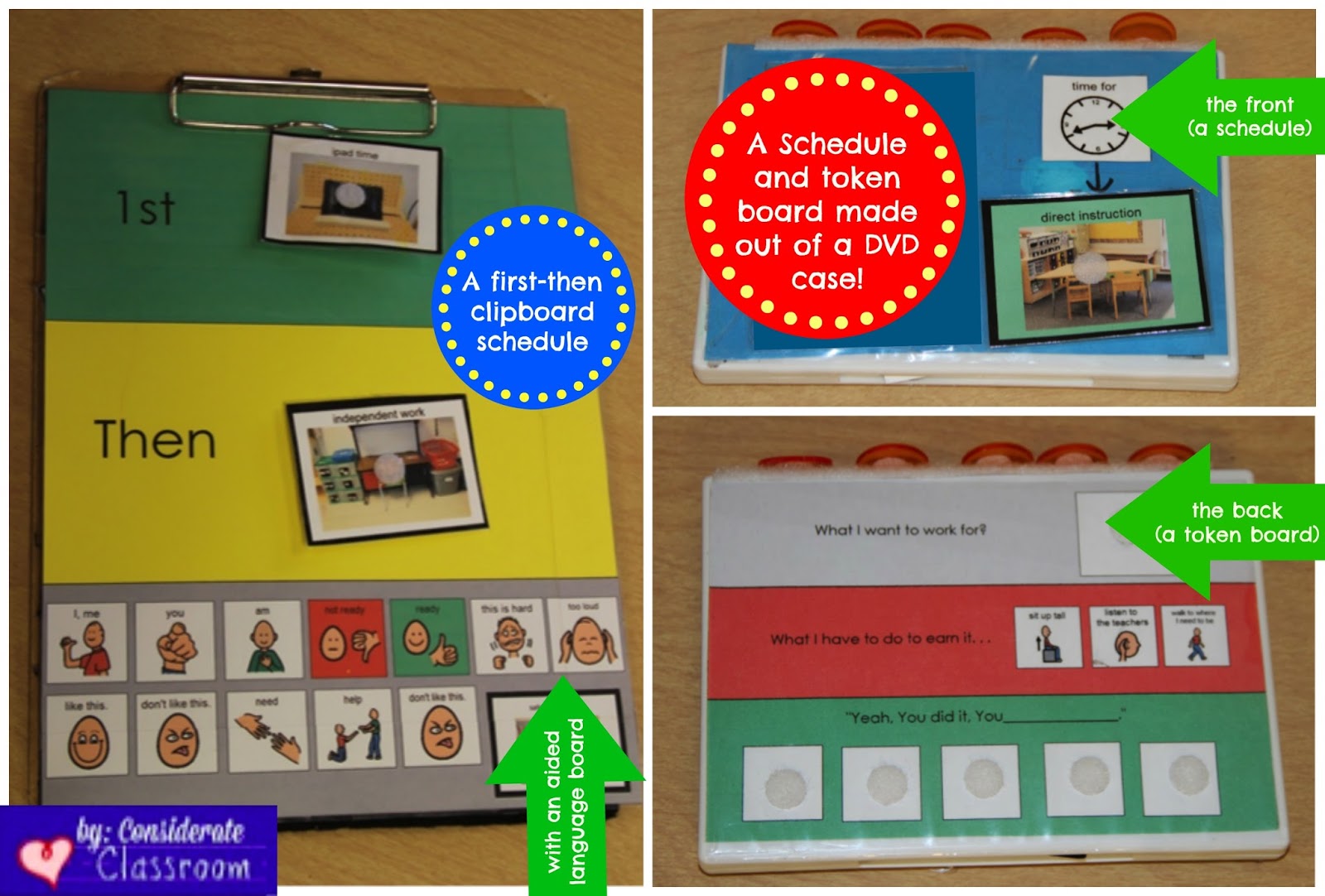
7. Make the schedule all in one- If a student has a reinforcement system or a communication support include it with their schedule.  It will be less for the student and staff to manage and keep track in turn making everyone more successful as the student begins to see the importance of their system and take ownership of carrying it around and using it as a support or reinforcement.  


8. Teach students their schedule- Whether it is with a video model, a social narrative, or through simple modeling, students need to know how their schedule works and what is expected of them.  Below is an example of a video model my son helped me with that we used with a student who had a really hard time transitioning from iPad time (a highly preferred activity) to independent work (a non- preferred activity).  We used the video clip to training the little guy to transition without behavior and frustration.  


9. Train staff members on how and why the schedule works- Often times we tell staff what to do with students or even worse assume they already know what to do.  When training staff about individual schedules we have to tell them why we are asking them to do what they are doing.  If they don't know why, amongst the craziness of the school day, they may fall back on bad habits of physically leading a student to their next activity or arguing with a student when they refuse to transition.  I will be honest, in the beginning individual schedules can be hard, the student may rebel, throw their icon, or try to escape but if we are consist with our expectation and leave our emotions out of it, we can teach the student a better way.  If we teach the schedule to our students AND OUR STAFF the message will be clear: schedules help everyone! They reduce anxiety and support independence, making the job of staff members much easier.


10. Continuously monitor and assess the schedules effectiveness- If the schedule is not working for a specific student restructure or reteach it!

And always remember that a student's schedule should work for them on their very worst day.  I like to think of it as their navigational system, it tells them where to go when, much like the GPS in your car.  You may not need it all the time but it is there when you do!

So there you have 10 tips to Implementing Effective Individual Schedules.  

Until next time, best wishes! 
Lindy