Showing posts with label rug play. Show all posts

Saturday, July 26, 2014

20 of Our Favorite Games and Toys!

As promised, here are 20 of my favorite games/toys to work on social interaction and student engagement. They are in no specific order but can all be found easily on Amazon!

Two quick tips before we get started. . .

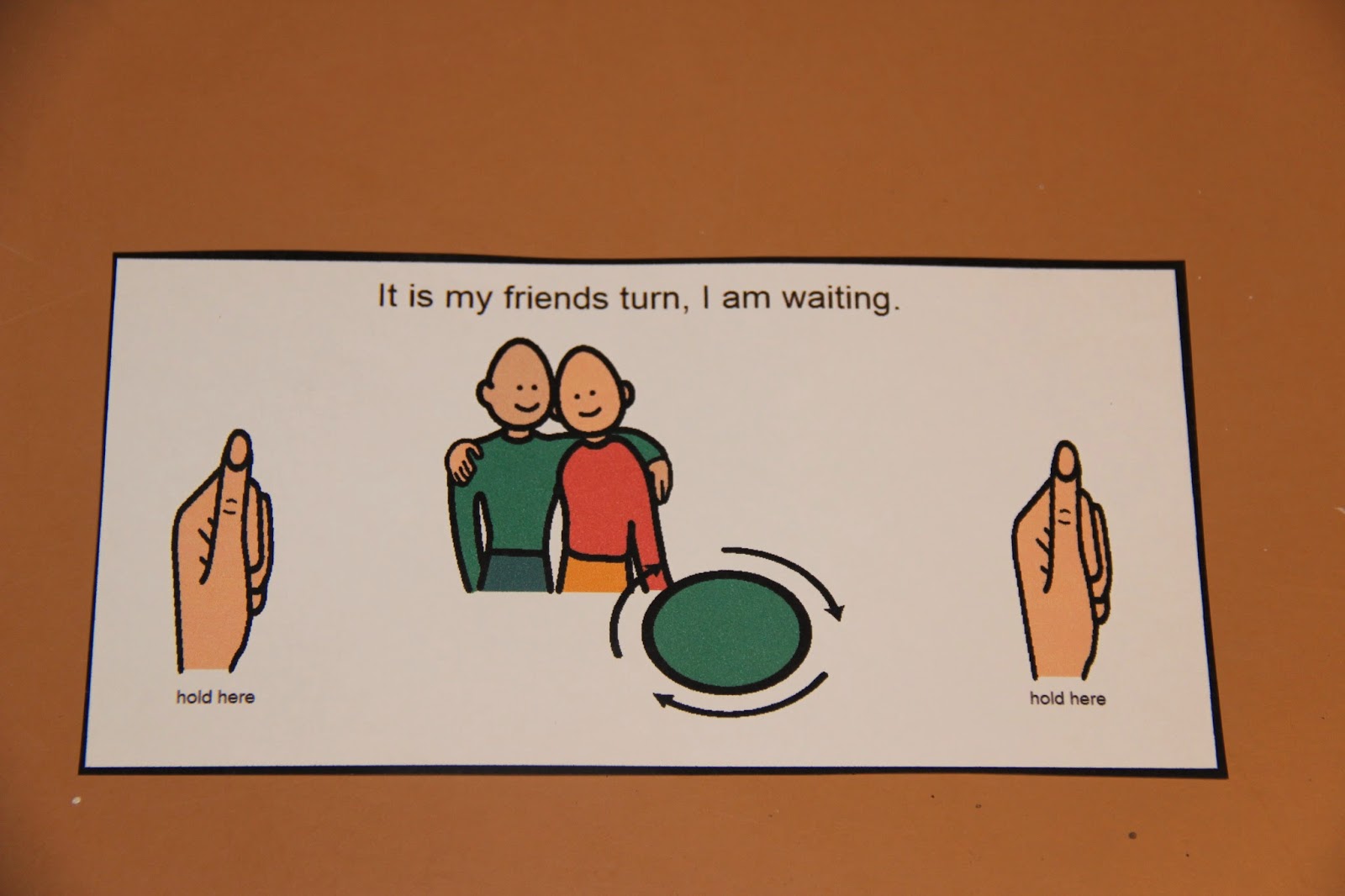
We often offer this little visual for kids to hold.  If they have a hard time waiting their turn and keep their hands to themselves, it helps shape and support better skills.


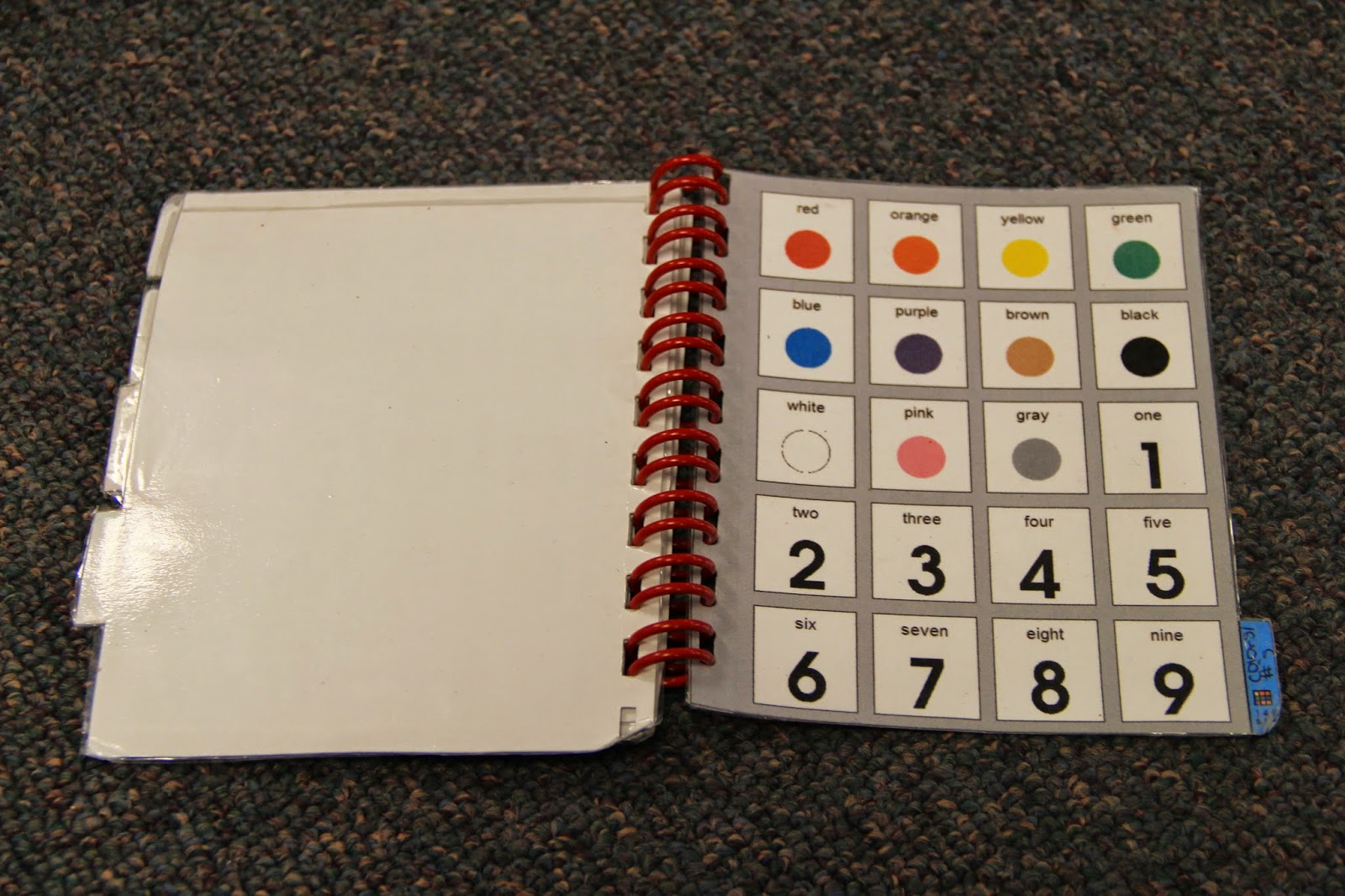
Then we use our aided language mini books to support kids in requesting a turn, and sharing what color or shape they would like.  You can read more about aided language boards and communication tools by clicking here.  


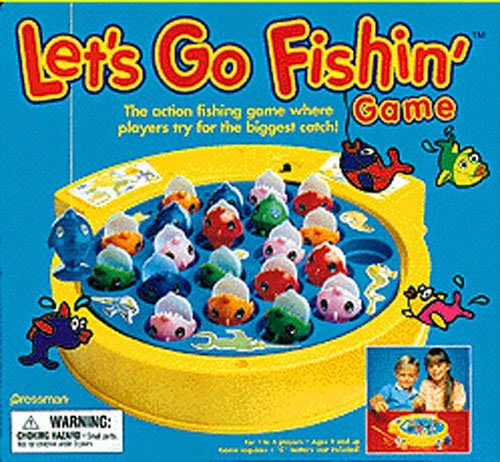
1.     Let's Go Fishin' Game by Pressman Toys great for color matching, impulse control and taking turns. 

For kids with slow reactions and limited fine motor control, we add rough Velcro to the fish and soft Velcro to the pole to make it easier for them to catch fish.
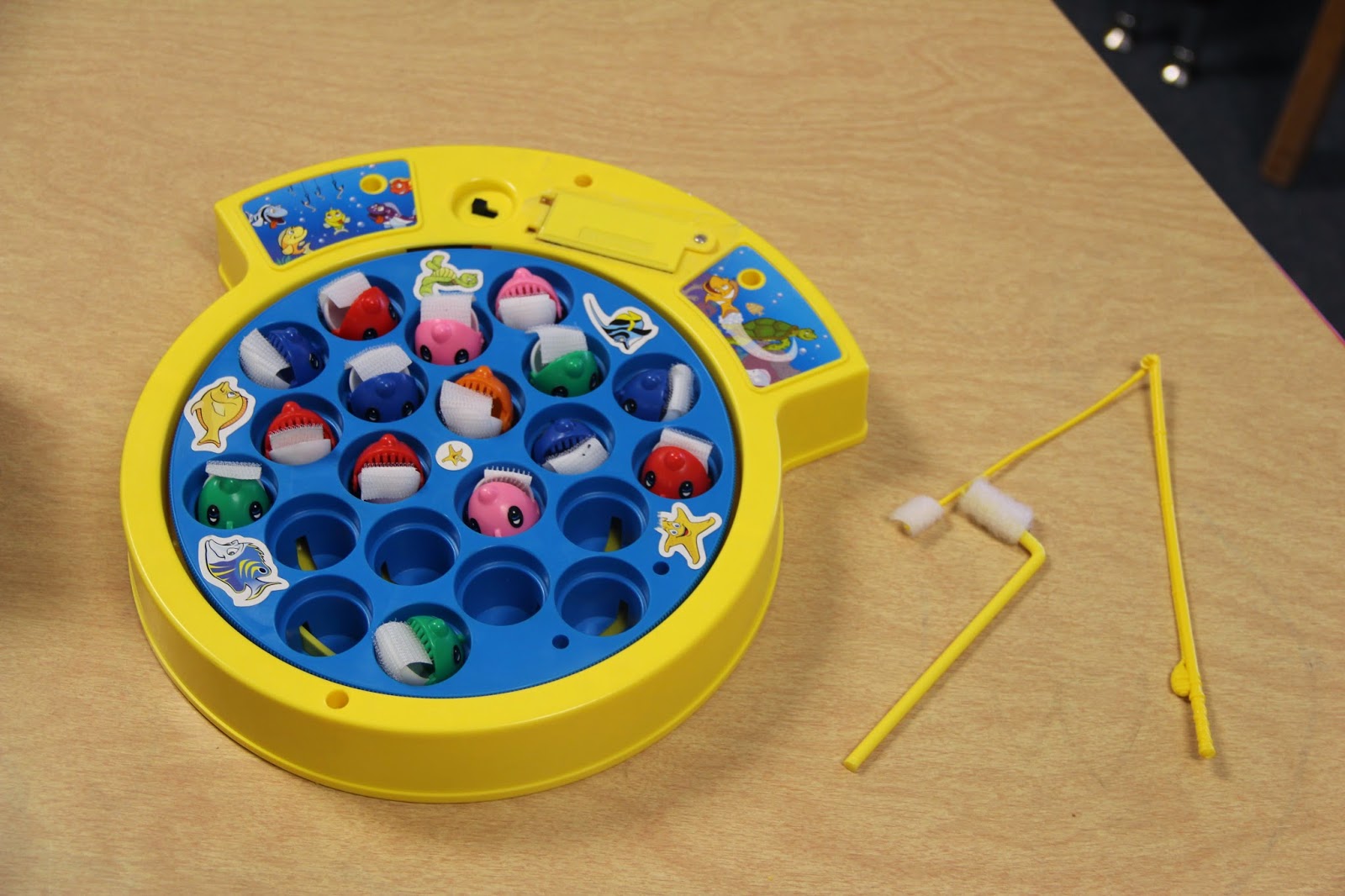

We also add a put-in feature for after they catch the fish.  This gives the game a little structure as they have a place for the fish after they're caught and know that the game is over when all the fish are gone.  It is also great for sorting practice. 


2.     Don't Break the Ice by Hasbro is great for turn taking during an indoor recess in the winter or for a snow, or polar animal unit.

3.     Drill and Design by Educational Insight is great for fine motor practice and a community helper or building thematic unit. We have used it as a motivating toy for after work time too. It is loved by many and keeps kids engaged for a long time.


4.      Whac-a-Mole Arcade Game by Mattel is an excellent tool for working on impulse control, attention to task, listening and hand-eye coordination.


5.      Candy Land Castle Game by Hasbro helps kids with turn taking, sharing, communication and colors and shapes.  (Unfortunately, this one is outrageously expensive. . .maybe it's a garage sale find you can search for! :)) 


We often add an ‘I don’t need that one’ tub for unneeded pieces to prevent stimming or throwing pieces inappropriately. It also helps the kids visually see that they are
done when their gingerbread person is full by not having extra pieces laying around. 


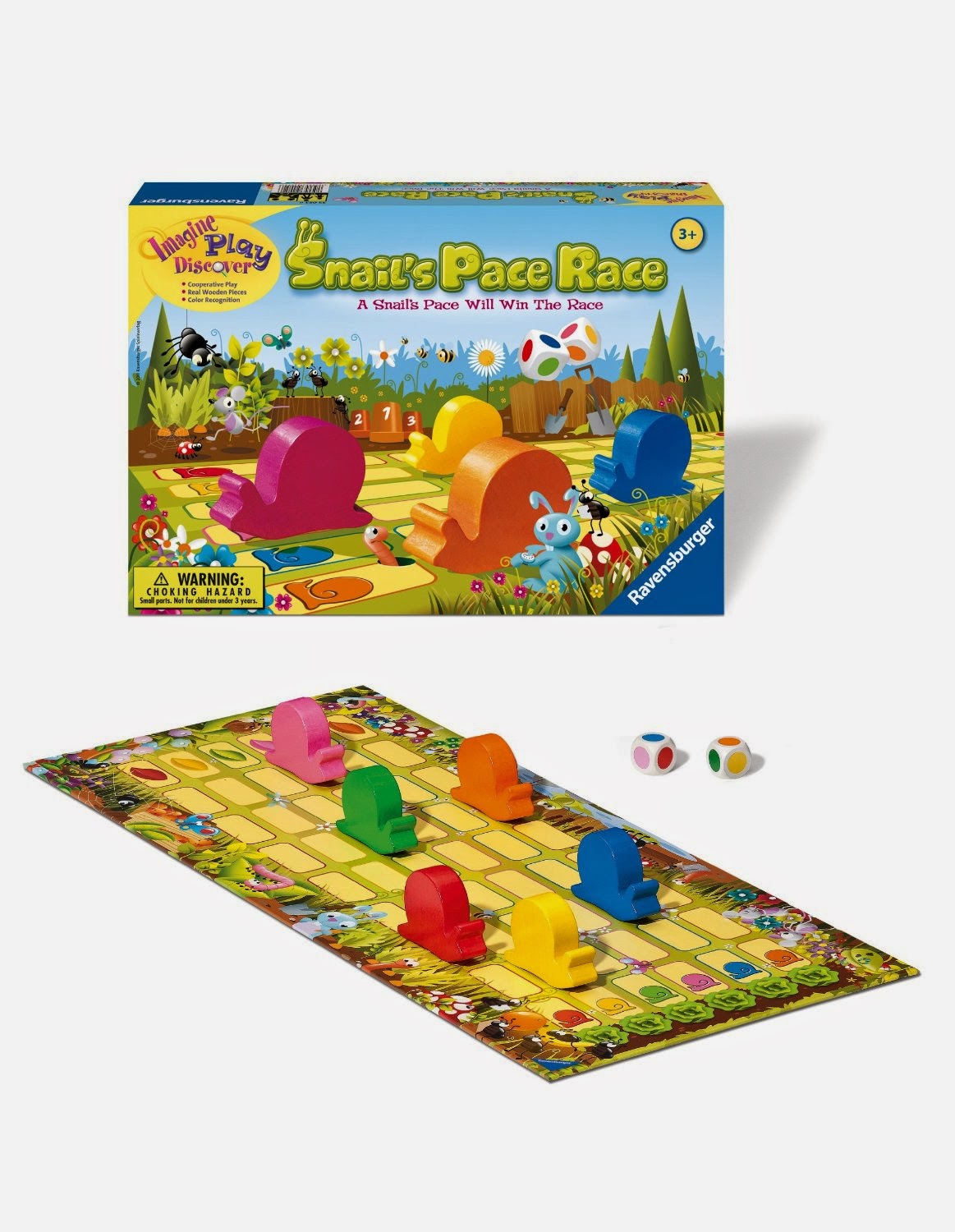
6.      Snail’s Pace Race by Ravensburger is a great color game where everyone wins and the kids can cheer for the colored snails rather than themselves!

7.      Critter Clinic Toy Vet  by B. Toys develops fine motor and problem solving skills.  We have used it for mystery motivation by programing various treats behind each door and allowing them to pick a door to open after they complete their work.
 

8.     Crocodile Dentist by Winning Moves help with turn taking, impulse control, prediction, and your dental health unit in February. 

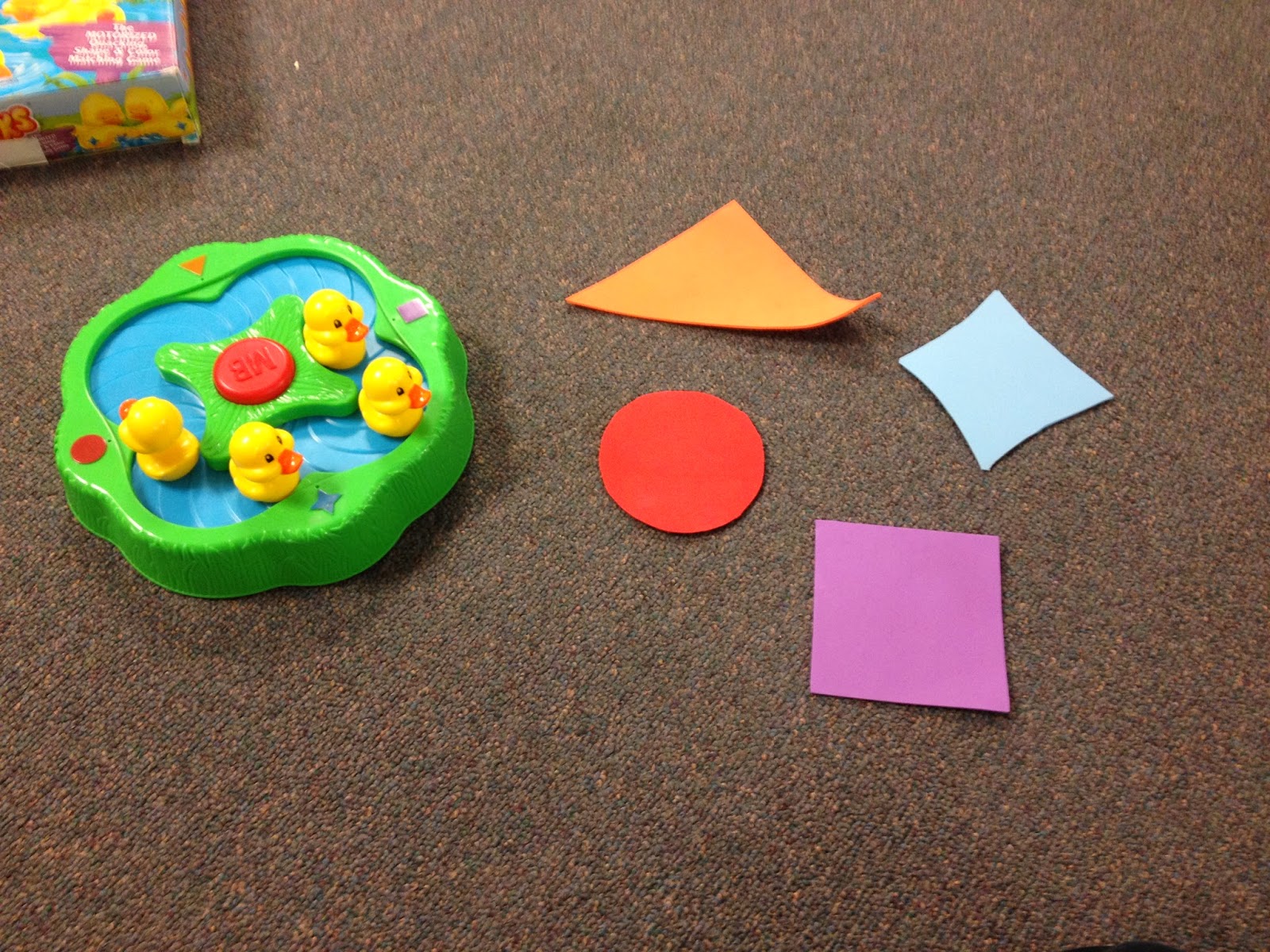
9.     Lucky Ducks by Hasbro aids in turn taking, impulse control, and color and shape recognition. 


We use little mini-craft foam ponds for the kids to put the picked ducks to structure it up a bit and show them visually which color is winning and/or finished. 


10.  Perfection by Hasbro is great for fine motor, attention to task and increasing speed. 


The kids loved it with our Chicka Chicka Boom Boom Unit using this poem:


11.   Melissa and Doug Hide and Seek Board by Melissa and Doug is a fantastic tool for developing problem solving and can even be used as a work task. 


We often use this aided language board to facilitate communication with this activity. 
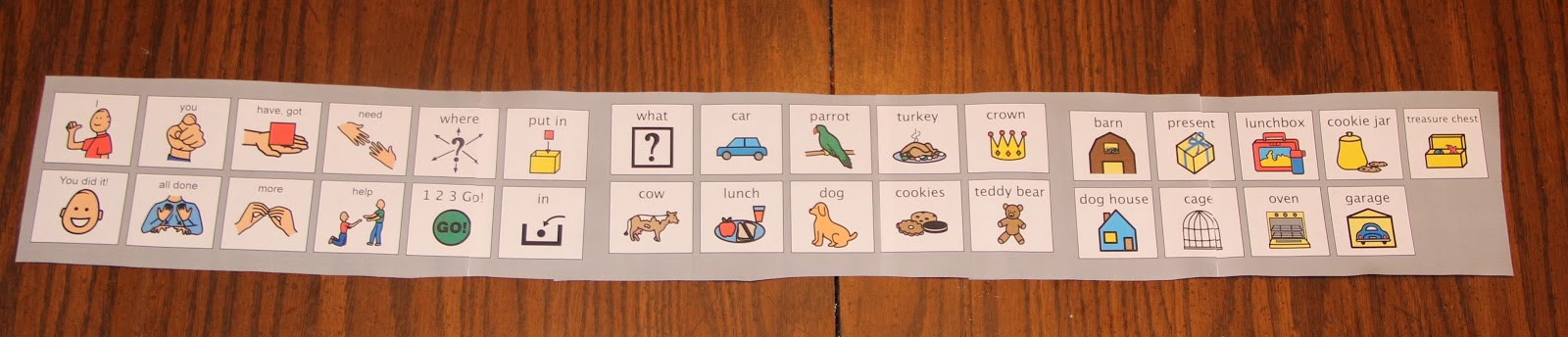


NOTE: You truly can make a game-specific aided language board for each game. I have started doing that and then sliding the board in the box or tub when I store the activity so it is readily available each time we get it out.

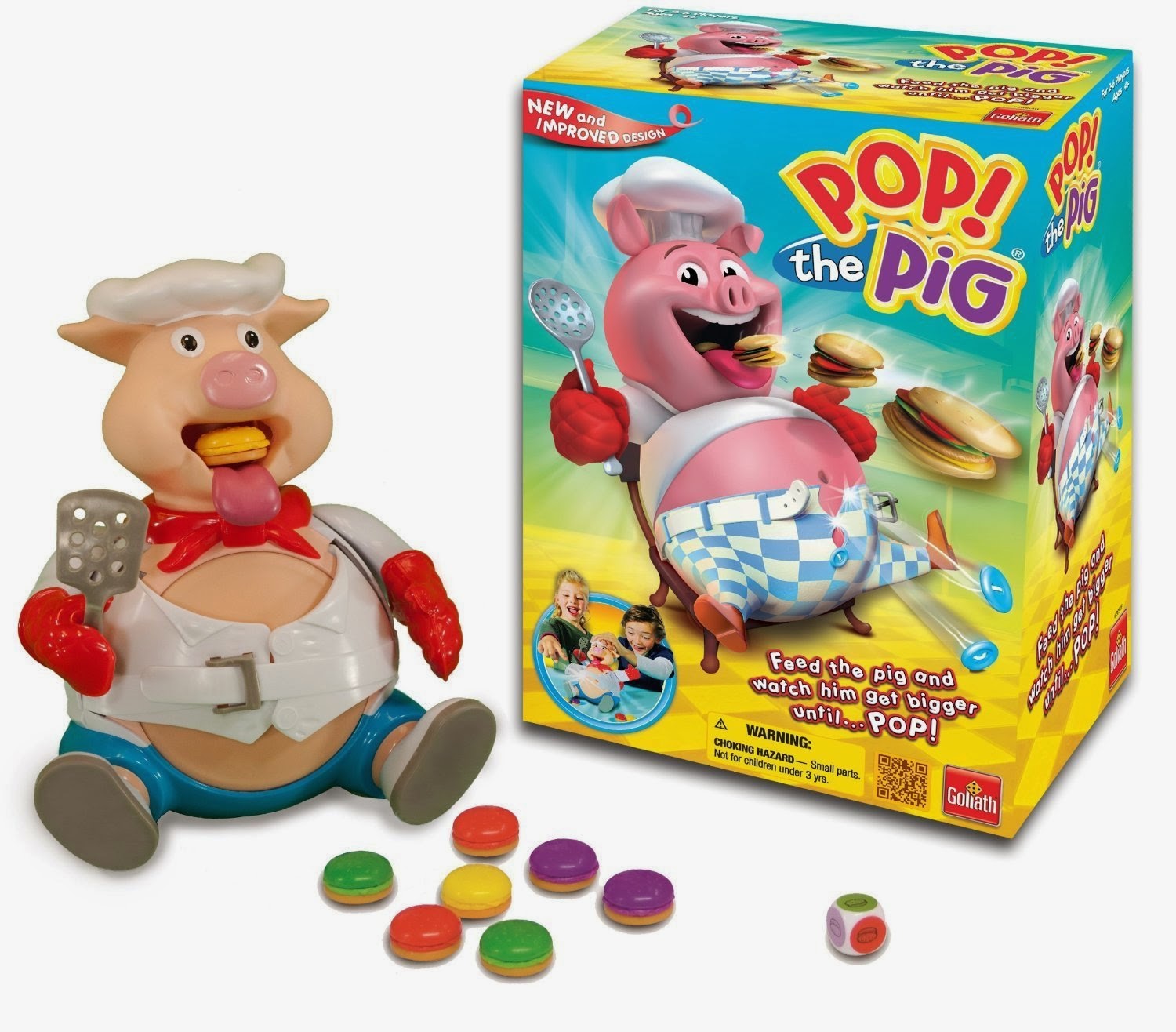
12.   Pop the Pig by Goliath Games (the new version) is great for color matching and requesting.  You can use it with your farm or nutrition unit. 

13.   Diggity Dog by International Play Things is awesome for turn taking, and listening skills.  We also use it for our pet unit.


14.  Elefun by Hasbro is great for working together, hand-eye coordination, and tracking. It can be a fun large group activity. 


15.   What’s in Cat’s Hat  by Wonder Forge is an excellent tool for guessing, predicting, listening and using your five senses.  Perfect for a Dr. Seuss Unit come March.


16.   Bulls Eye Ball by Hasbro helps with hand-eye coordination and fine motor skills.  Several of our students have used it as a motivator.  "First work, then Bulls Eye Ball."  (When all the balls have scored, it is time to go back to work.)


17.   Melissa and Doug Magnet Dress Up by Melissa and Doug is great for matching and working toward self-help and clothing awareness. 


We often use these visual cards to help our kids dress the superhero boy kit correctly. 
Side one has an actual photo of how to dress Joey.
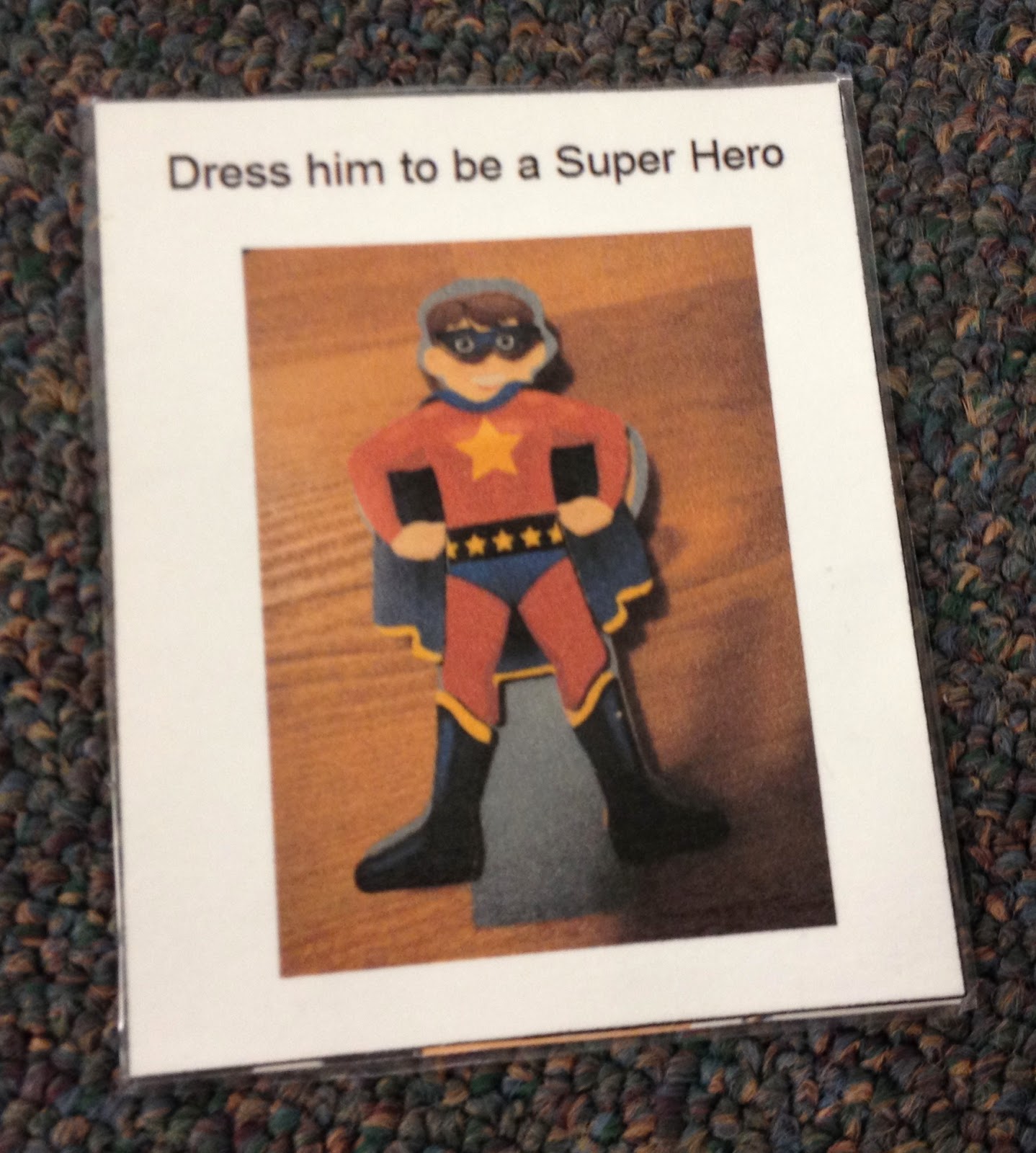

Or side two that is an icon image of what we want them to dress him like
(like a fireman, knight, etc.), which can be a little more challenging since it has less visual cues.


18.   Pop Up Pirate by Tomy is great for turn taking, listening, and waiting your turn.

19.   Guess Who Game by Hasbro helps with listening and question skills.  They have a new version that has sea life, food, pets, and vehicles great for thematic units.  Almost like a guess what!  The kids love it. 


For my boys, we programmed the original guess who game with family members photos a trick I learned from Family Fun Magazine!


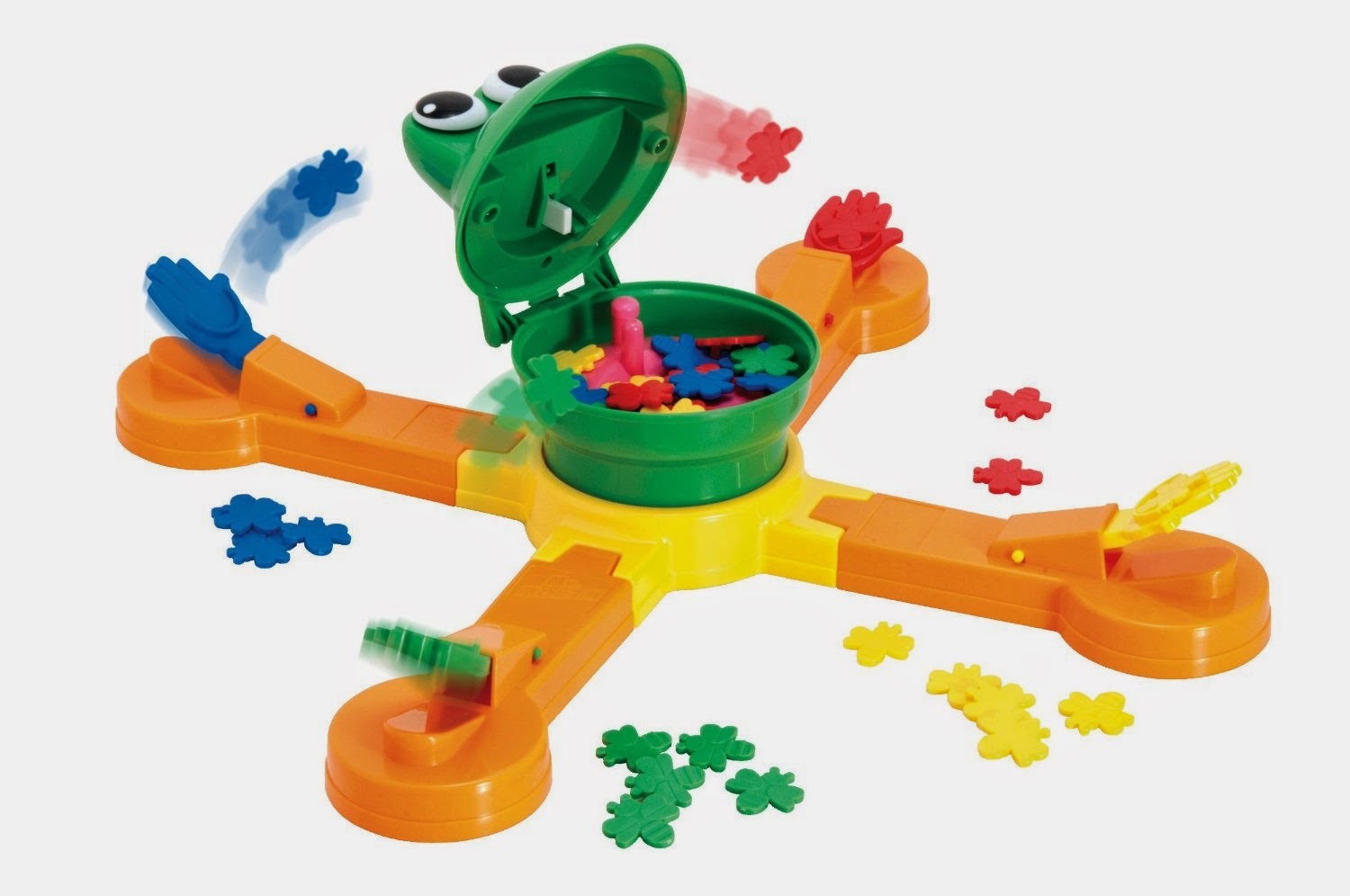
20.   Mr. Mouth Feed the Frog Game by Tomy is great for turn taking, hand-eye coordination and encouraging others.  It can be used for a frog, pond life or insect unit!


So there you have it...20 fun games and activities that pre-K kids love!  We use them in all different activities in the classroom...small groups, rug play, social small group, free play, direct instruction, large group and even a few at independent work in some fashion. 
Please let me know about fun games I missed!  It would be wonderful to have an even longer list for people to access.   Also any modifications or adaptions you have create for these games or others are welcome!  It is great to be a community of learners.  Until next time, happy game night or day!!  -Lindy


Tuesday, July 15, 2014

Let's Play: Building Play Skills with Special Needs Children


I have always been a huge supporter of teaching children through play.  When I started my career back in Head Start many years ago, playtime was 45 to 60 minutes of our school day, much like it is in most preschool classrooms.  So naturally when I moved into my Early Childhood Special Education classroom, I thought I could do the same, but I was sadly mistaken.   The majority of the students in my special education classroom did not have the skills necessary to play.  That may seem silly to most of us, as play came so naturally when we were children ourselves, but children with a variety of social and communication deficits do not always pick up on the concept of play.

In reflecting on the phenomenon of play, one will find that it takes a great deal of abstract thought, and imitation skills to engage in functional play.  Both of which, are lacking with many of the students in special education preschool classrooms.  If asked to play, they will either stim on a toy that gives them visual feedback such as the propeller on a toy helicopter, or wheels on a match box car or they will engage in repetitive play that is self-soothing such as lining cars up in a specific order or scooping sand through a sifter over and over again. Yet others are at the exploration stage of exploring their environment to the fullest. . . dumping things out, roaming from center to center, or even exploring and messing with things are not toys at all.

So how do we build play skills and train success?   How else, through centers!!! In our classroom, we have three areas that support play and socialization.  One is the social center which was shared in a previous post and the other two are variations on rug play.

Area one is a traditional play area, where the students have free rein to play with a variety of toys on the shelf. 

 
This design is effective for our returning students and students with higher skills.  It is the area we will focus on today.  The main rule of the area is that the students need to play with the items from the shelf on the area rug directly below the shelf. 
 

For many years our rug was a multi-colored preschool circle rug with various shapes on it.  However this past year, I purchased a 6 by 9 foot solid colored area rug.  My personal preference is a solid colored area rugs without designs on it as the design can be highly distracting for kiddos and can be hard for kids with visual impairments to play and walk on. 

What makes the area successful for our students is our concept of less is more.  We only have four to eight different activities on the shelf for the kids to choose from and each activity is limited in the number of items it has especially at the beginning of the year.  For example we may have 20 wooden blocks out rather than the whole set of 80.

To support the students in requesting however I will Velcro an aided language icon on the shelf for students to ask for more if needed.   This supports our nonverbal kids in requesting and reminds all the kids that they have the option to request more. 
 
We also have all done-put in prompts on the insides of each toy tub.  This helps the kids remember to pick up their toys as they finish playing with them.  Remember a visual prompt is always easier to fade than a verbal one! 


One play expert aka, paraprofessional or classroom volunteer is assigned to this center to help facilitate, model and encourage active engagement with toys in the area.  Depending on student levels the kids are here for 10 to 15 minutes.  We never want them to be at a center too long.  We try to stretch their attention span over time but watch it closely because if they are there too long that is when problem behavior starts to occur.  The idea is to structure centers so that they are actively engaged for 10 to 15 minutes at each center and move onto the next activity before their ability to engage decreases.  The more actively engaged students are the less problem behavior will occur.!

NOTE: for students with little attention to task, we added in functional errands between centers or in the middle of centers.  For example, the students may go to the office to check our mailbox or return library books. I will share more about that in the future but for now I wanted to share my top 5 activities items for rug play.  Each one with its own modifications and visual supports.

1.      A Wood Train Set - modified with numbers and color coding so that it makes one complete track.  Remember less is more by having just the pieces needed to make a figure 8 track the kids and staff can put it together in a functional manner and then focus on pretend play with the train and people. 
 
 
Here is a closer look:  You can see the numbers on each track piece.  If you look really closely you will see there is a red permanent marker line online the side of the track that is a visual cue to show the kids that the red stop sign and the red roofed police station go by that track. 
 
 
              We have also taped an aided language board inside the lid of the box so we can support
              and facilitate language as the students request various pieces and track numbers. 


2.      Marble Works– modified with a letter matching system this set can be put together without extra pieces quickly and effectively so that the marbles run through without getting caught up.  This is one of our favorites for turn taking and playing with a group as the game is so fun it caters to the kids playing together.  Of course with some turn taking and sharing lessons from staff! 
 
 
       Here is a closer look at the letter matching system we use to support the students and staff in putting a functional marble game together.  Note:  this does limit the students creativity a bit but it helps them gain functional play skills.  We can always add the creativity piece back in after they get the concept of how to play with a specific toy.  Rather than spinning the wheel on the little yellow piece over and over again, they can watch their marbles go through the maze over and over again like the game is intended to play. 


      This game also has an aided language board taped to the inside of the box's lid so the students can request the letter pieces and marbles. 
 
 
TIP:  For kids that are at the early stages of play we have modified this game to be a task box with just a few pieces.  The kids can work on the skill of top to bottom and starting on the left and end on the right. I got the idea from Task Gallore: Let’s Play .  It is an excellent book for gathering play ideas!


3.      Duplo Legos- modified with step by step books to make lego creations.  Perfect for kids that work well using visual work systems.  They have a visual of what they are making and a step by step process of how to do so. 


              Remember less is more!  
So for some students we will just have the pieces for a particular build set out. 


for others we will have all the pieces that go with our Lego step by step builds
so they have to use their problem solving skills to find what they need. 


And again there is an aided language board taped on the inside of the box lid
 so the kids can request what they want to build. 

 
TIP: the Lego company also has a few step by step sets to build. 
For example the animal build and literacy sets. 
 
4.      Little People Sets- There are all sorts of sets everything from an airport, to a farm, zoo, fire station and house.  We even have some holiday sets that the kids enjoy.  We modify them by adding roads, templates and step by step story books to follow along and facilitate play. 


My favorite is this tablecloth template I made for our barn set and farm unit. 
The kids can work on prepositions as they put animals on the water, in the barn, beside the field, etc. and they can also work on motor skills as they plow the fields following the lines. 


5.     Numbered and Lettered Puzzles- modified with letters or numbers on the back to support the kids in putting them together correctly.  
 
For this activity we often use our number and letter paint sticks to help the kids find the next letter or number.  You can read more about these paint sticks in this previous post. 

I could go on and on with modified play tasks but the main idea is the more structure we can add to activities, the more we uncover the mystery of play for our kids.   You may have noticed that all of the modifications involved letters, numbers, and other pre-academic skills.  And that is no accident, it offers exposure for our students without overwhelming them and also caters to several of our students’ special interests in letters and numbers.  By including their special interests, we can support engagement as the students want to interact because it involves something they enjoy. 

We pull in other special interests whenever we can: cars, trucks, trains, dinosaurs, and animals have been some of the leading special interests over the years!  That being said however, because we are using special interests we have to have a way to set limits when center time is over and it is time to move on.  Especially since our rug play center duals as the large group area.  We do this by velcroing towels over the shelfs.  During centers the towels are rolled up on top of the shelf.  When center time is over the towels lay over the shelf. 
 

Now moving back to the topic of special interests, we do whatever it takes to build student play skills.  For example, this past year one of our students had very limited interest in play, to support her in being successful and help her engage longer than her baseline of 30 seconds, we incorporated her special interest of plastic baggies and her strongest skill of putting in.  She is a little rock star when it comes to put in tasks.  Early on it became her special interest as well as her strength so we used it to our advantage.  In the beginning, we had her do things like put animals ‘in’ the farm set, then we moved on to taking toys out of plastic baggies and giving them to the staff person to put together to make a train track, puzzle, etc. 

Note:  The plastic bags were only used in the presence of an adult and only for the first few weeks.  For whatever reason the student enjoyed the noise and feel of baggies, and with her limited ability and interest to touch things it helped us get past her tactile defensiveness.  She would touch anything once if it was coming out of a plastic bag.  Overtime she realized other things were not so bad to touch and we were able to move on to more functional play skills. 

At this point, some of you might be wondering, what is the point, it seems like a lot of effort to teach play skills why not just work on the pre-academics afterall that is what school is all about . . .

Well, in doing a little research about play you will find that play is the precursor for social and educational success.  You can learn more by accessing my presentation about play and the resources on the last slide of the presentation.  

Teaching play skills, also teaches children how to fill their downtime and what to do for fun and leisure.  Research shows that students with disabilities, especially those on the Autism spectrum are less likely to hold a job later in life.  Not because they can’t do the work but because they do not know what to do during their downtime.  They need support with social skills and how to interact with others in the workforce during breaks, and other social experiences.  Hence the need for teaching play skills at an early age that will lead them to appropriate leisure activities. 

Okay I will get off my soap box now, and say so long!  Come play with us next week as we dive into the rug play center for our beginning students.  Happy Play Time! -Lindy