Showing posts with label play time. Show all posts

Friday, November 20, 2015

Let's Play Dress Up: Step by Step Visuals for Students Who Struggle at Pretend Play

I am excited to introduce a new tool to use in your pretend play center!  You might remember a few years ago, I shared a social narrative to support students in making various meals at the pretend play center. 


Well, now I have created a similar social narrative to support students in trying on dress up clothes. 


As I have mentioned before, the pretend play center can be pretty abstract and uncomfortable for students who don't understand how to play pretend.  By having social narratives like the two examples above, students can see how to play dress up, step by step!

For example, in this book you can turn each page and have students try on various articles of clothing.  The beauty is that an aided language board is attached to the last page and can be folded out for students who need support in communicating their opinion about each article of clothing they tried on.


Do you want to use this social narrative in the classroom?  Go to my Teachers Pay Teachers store to purchase it, as well as an updated version of the Food Making Visual with choice for students to pretend eat their creations or serve them.  Just one more way to encourage students to interact with one another. 


Also in this Teachers Pay Teachers file you will have access to labels to sort food by food groups and clothing by person!


Until Next Time... Happy Pretending,
Lindy


Monday, September 1, 2014

Our ECSE Classroom Schedule: Part Five - Outside Time (10:20am -10:45am)

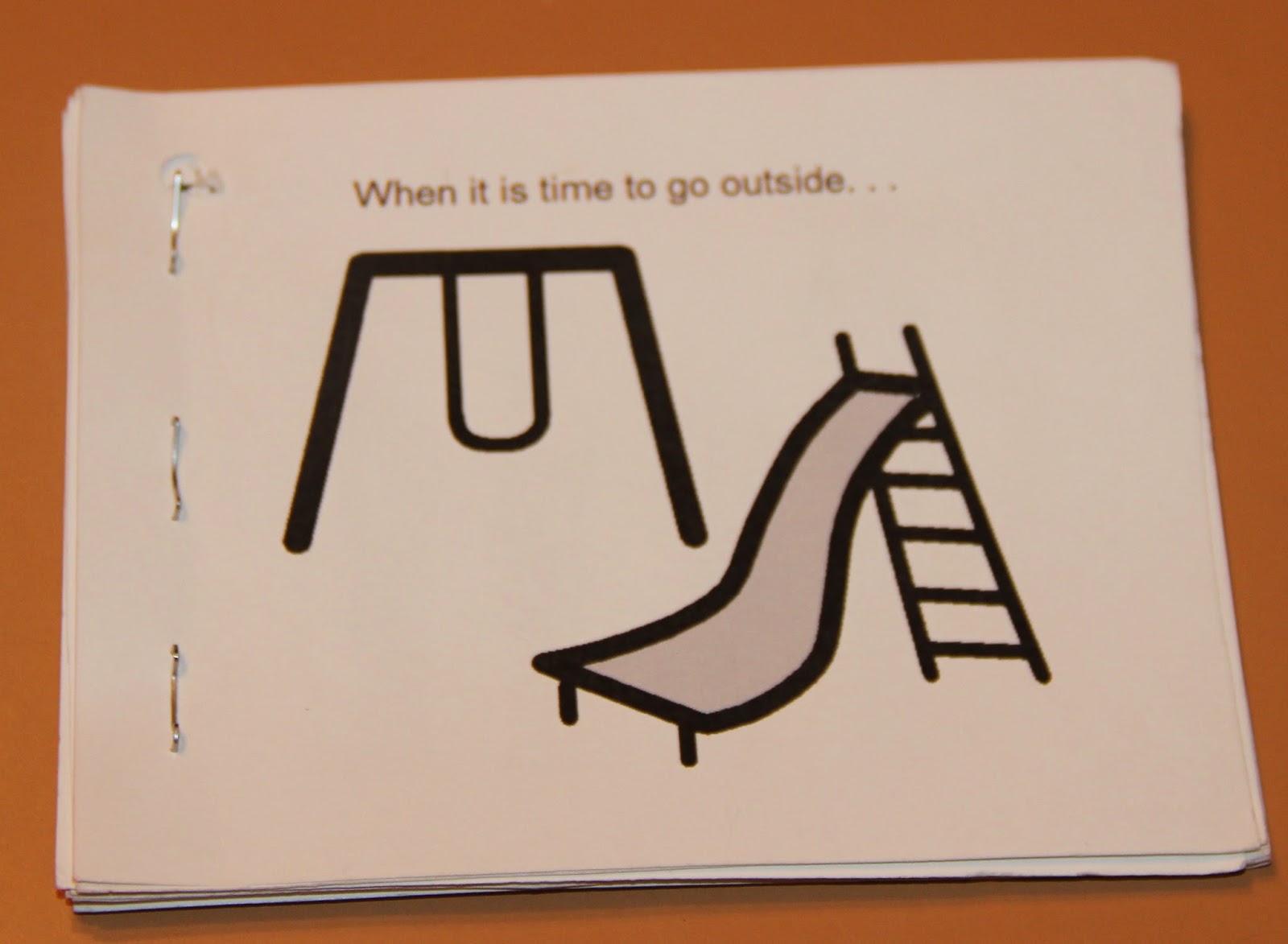
Welcome back to our classroom!  We left off with the students just finishing up snack.  With full bellies (and some help from dear Mother Nature), we head outside for a little sunshine next.  That being said, we live in Kansas so occasionally rain, snow, or 70 mph winds deter us from outdoor play.  

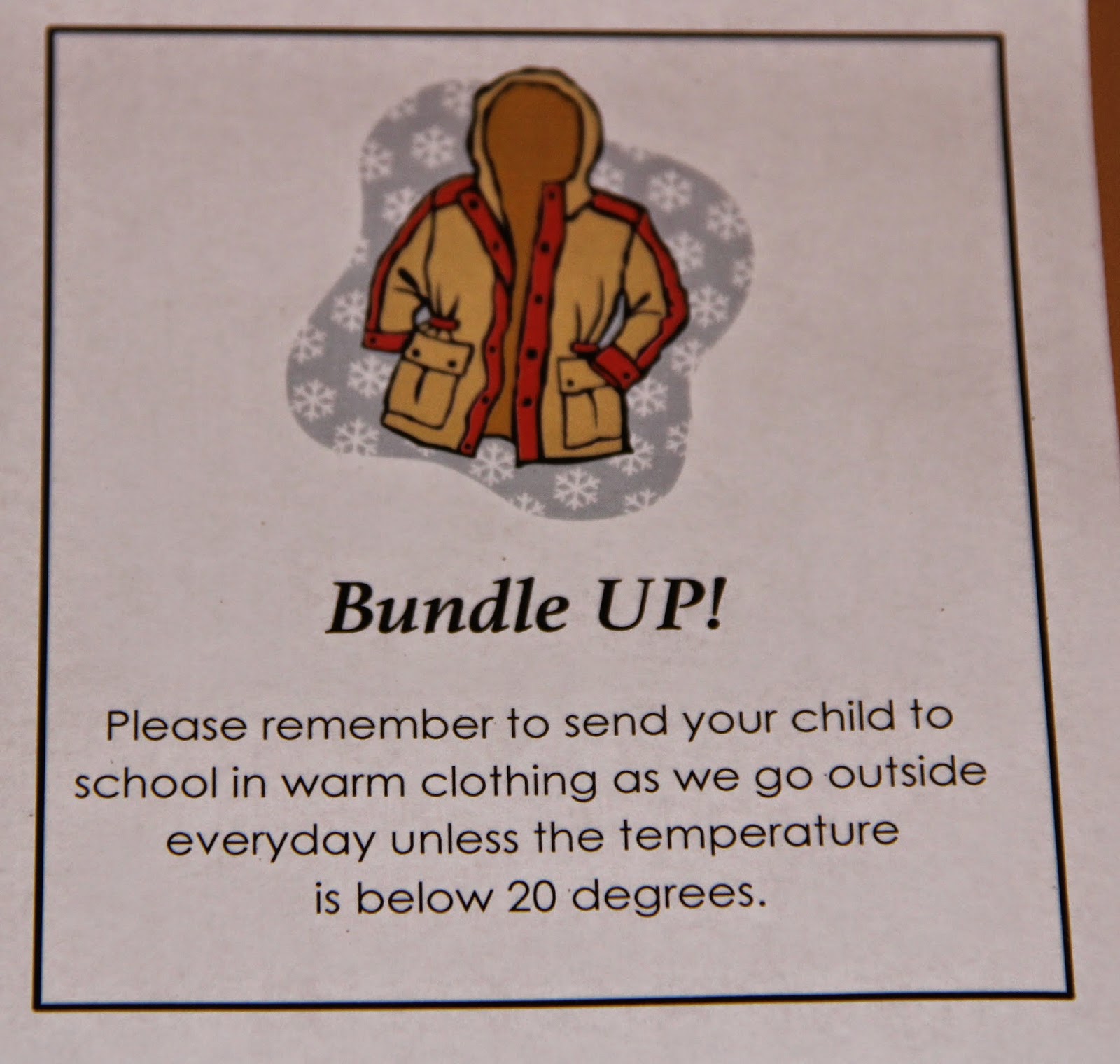
Also being that some years our kiddos have some pretty fragile health needs, we don’t always go out when the big kids do.  Our school has the policy that students will go outside if it is above 20 degrees with the wind chill.  We go case by case and year by year with this policy.  Never going out if is below 20 but also implementing other policies as needed.

We try to prepare parents and students by reminding them to dress appropriately for the weather with reminders, notes in the handbook, and monthly newsletters like the one below.


Despite our efforts, it is a judgement call whether we go outside or not.  On somedays due to a drastic weather change from the day before, parents do not dress their kids appropriately for outside play.  I always have a few extra coats and jackets for kids to borrow, but if I don't have enough we go to Plan B. 

(Plan B:  You may remember from my explanation of centers that if we do not go outside, we simply stretch the length of each center by 2 minutes to add a total of 20 minutes to learning rotations to prevent down time at the end of our day.)  

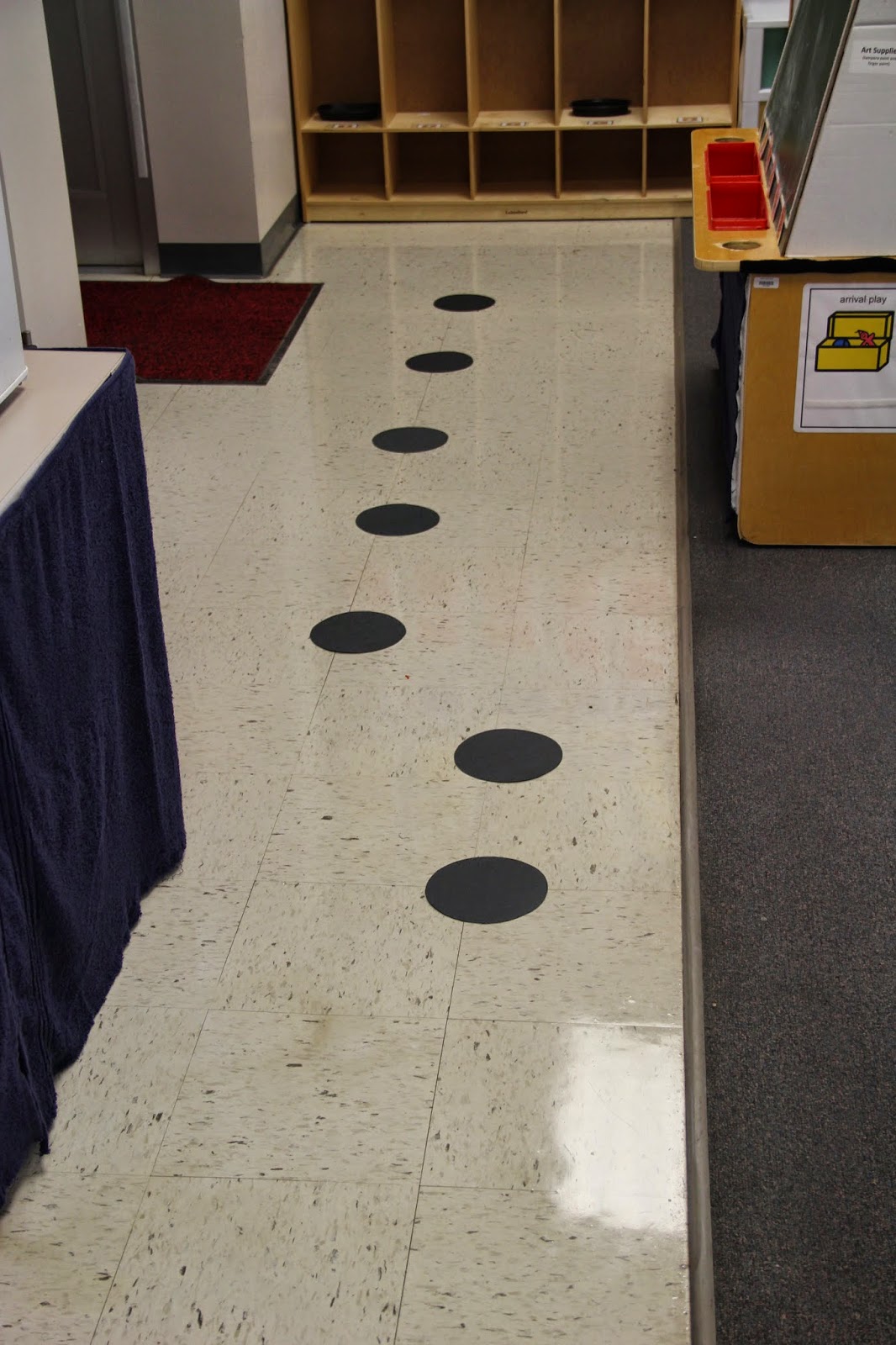
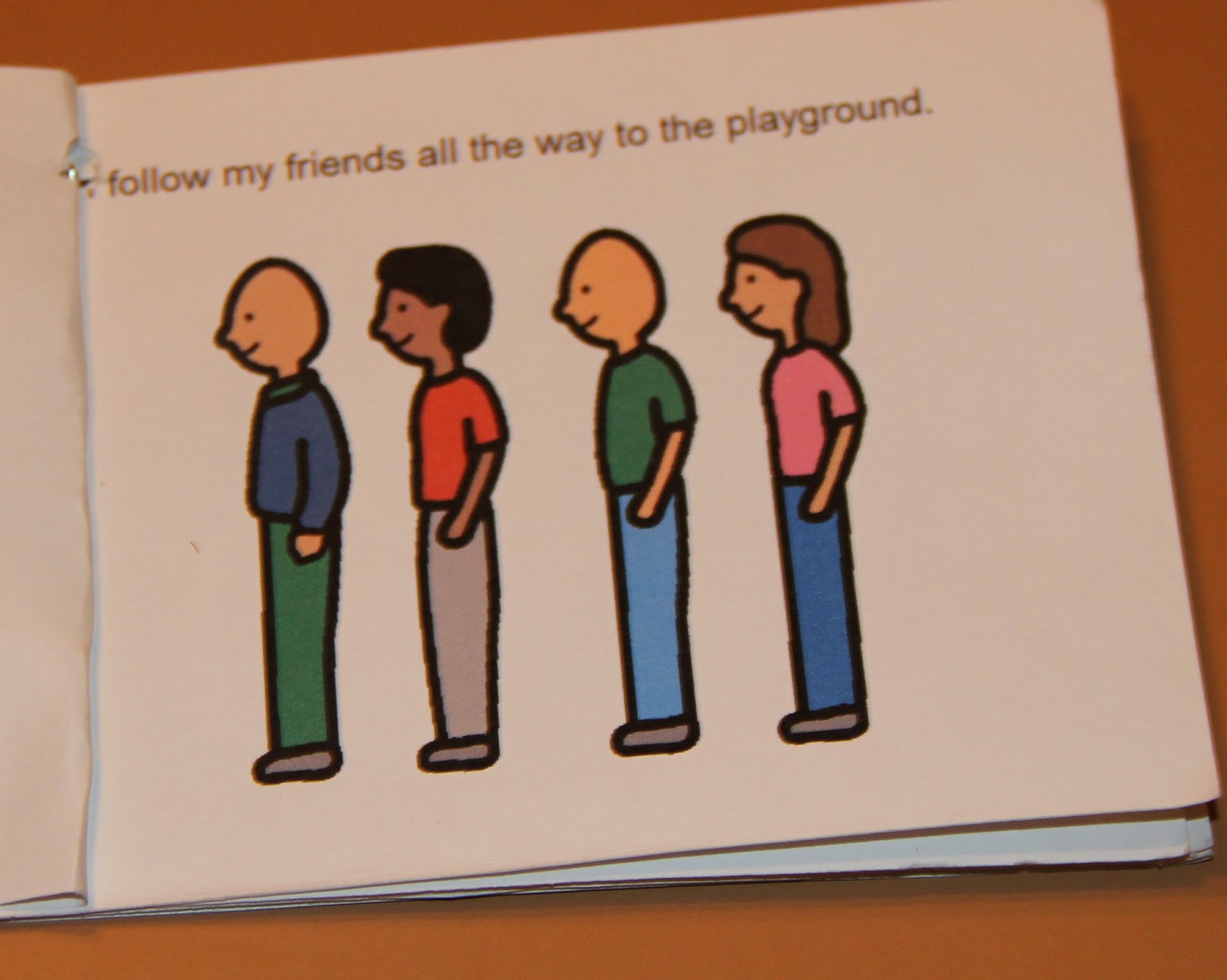
The routine for going outdoors is to line up on designated circle spots and wait for all the peers and teachers to go out together. 


Note:  There are two doors to our classroom so we actually have two ways to line up.  Lining up on the circles to go outside and lining up on the triangles to go into the hallway.  


Just another way to add shape recognition and listening skills to our daily routine!  We also have square shapes by the sink for students to stand in line for washing their hands before snack. 


The lining up process for outdoors time can be lengthy as we try to support all students in working on independent skills to get their jackets, hats, and gloves on.  Although this is an important life skill, it makes the transition and wait time a little lengthier than I would like. 

We try to keep our students engaged and on their toes during this transition by talking about our day, reviewing concepts with "I spy" games and guessing games, or singing songs that encourage imitation and active listening. 

For example, we may sing to the tune of "If You're Happy and You Know It".

If you’re ready to go outside, clap your hands, CLAP-CLAP***
If you’re ready to go outside, clap your hands, CLAP-CLAP
If you’re ready to go outside clap, clap your hands.
If you’re ready to go outside, clap your hands! CLAP-CLAP

***We change the action words to take a deep breath, stomp your feet, shake a hand, give a hug, stand quietly, etc.  I like to change the song's words to fit the class' needs in that moment.  If we need a little connecting, it might be hug. If we need to calm, it might be breath or stand quietly.    

Another great chant we use, adapted from Miss Molly's work at Colby Head Start.

Standing in line playing a game, 
when I point to you, please tell me your name!***

*** We change the chant depending the level of the students and what their goals are.  We might say tell me your mom's name, tell me your birthday, tell me your favorite toy or even say non-verbal directives for our limited language communicators like point to your nose, or point to your teacher, etc.  

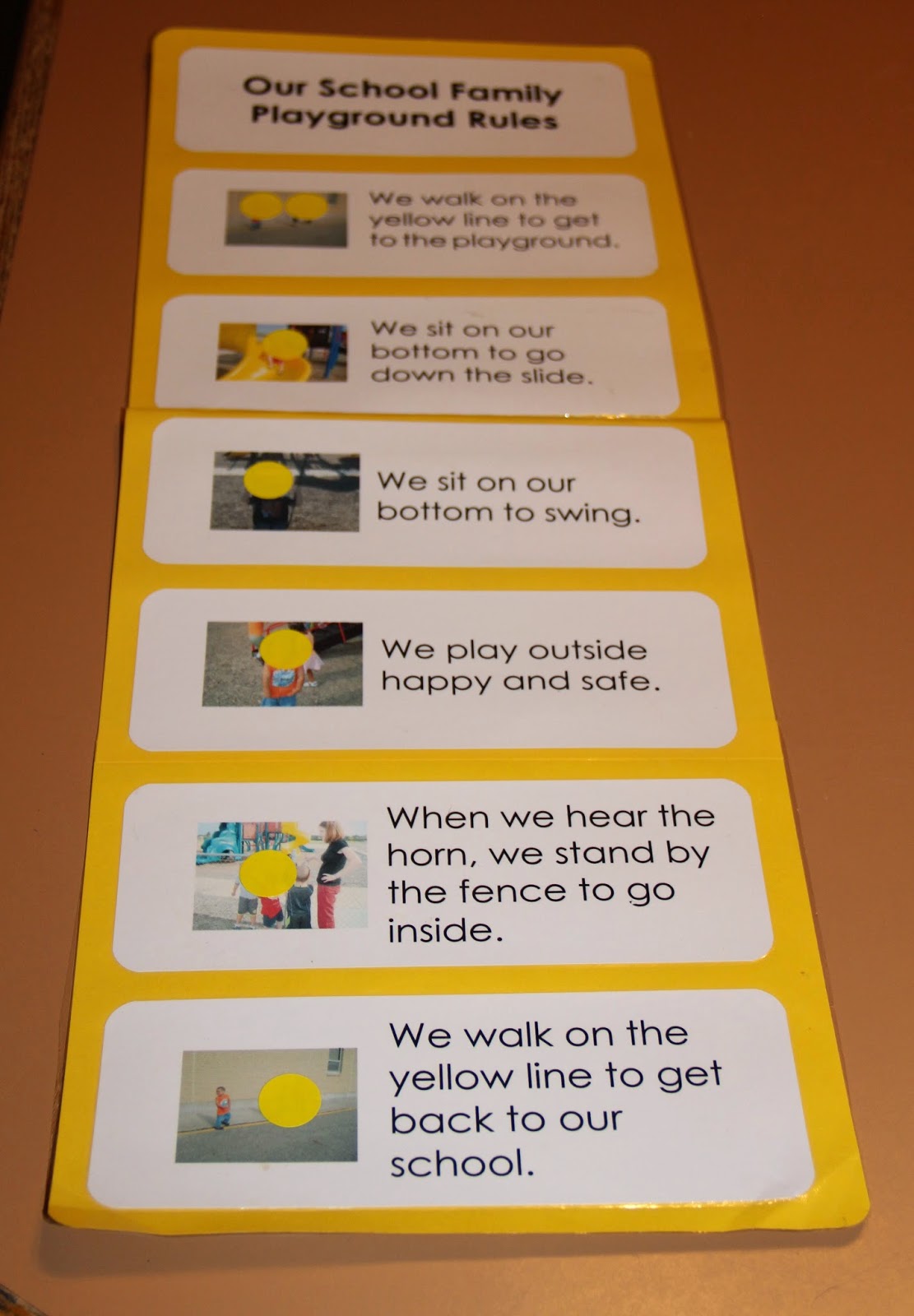
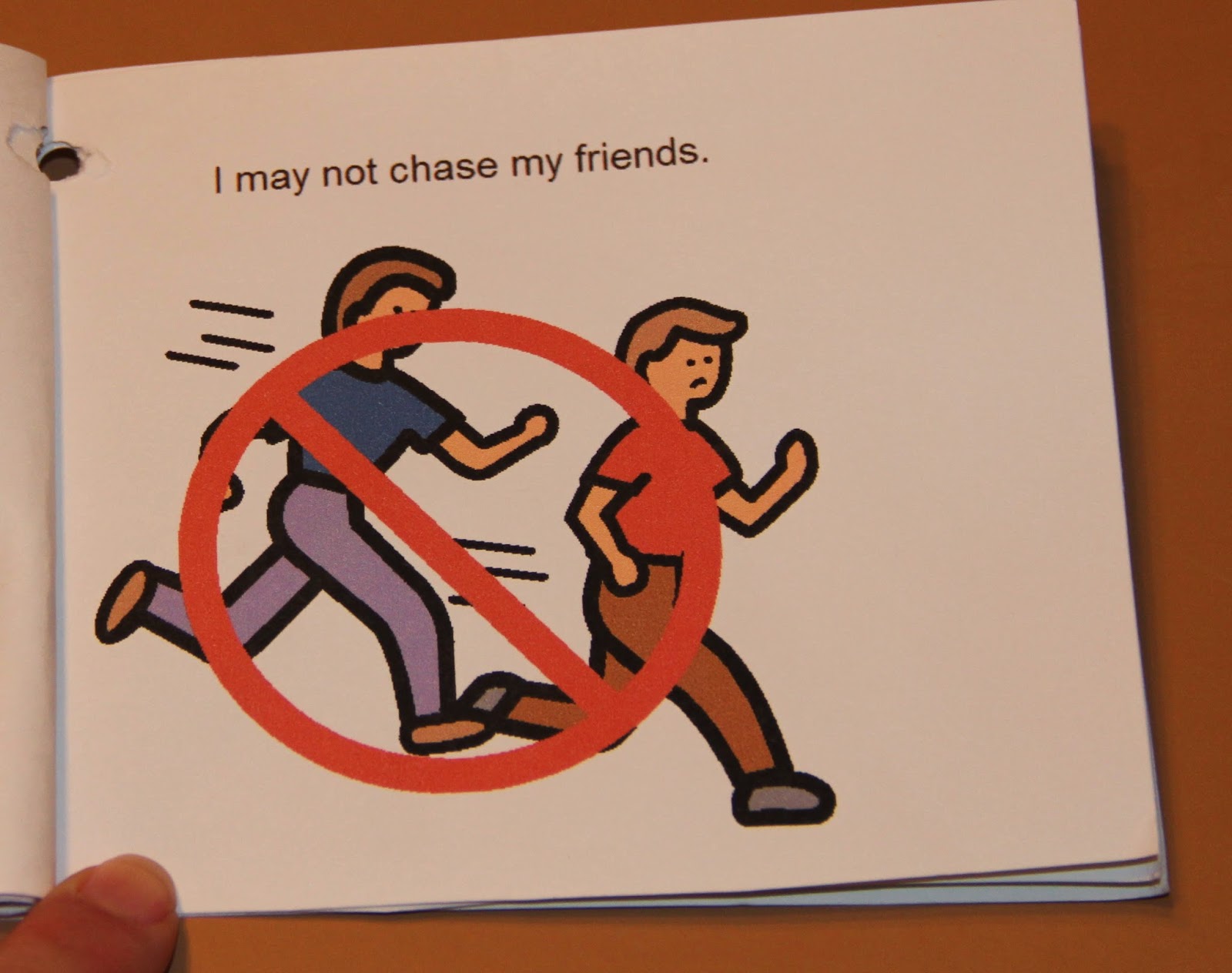
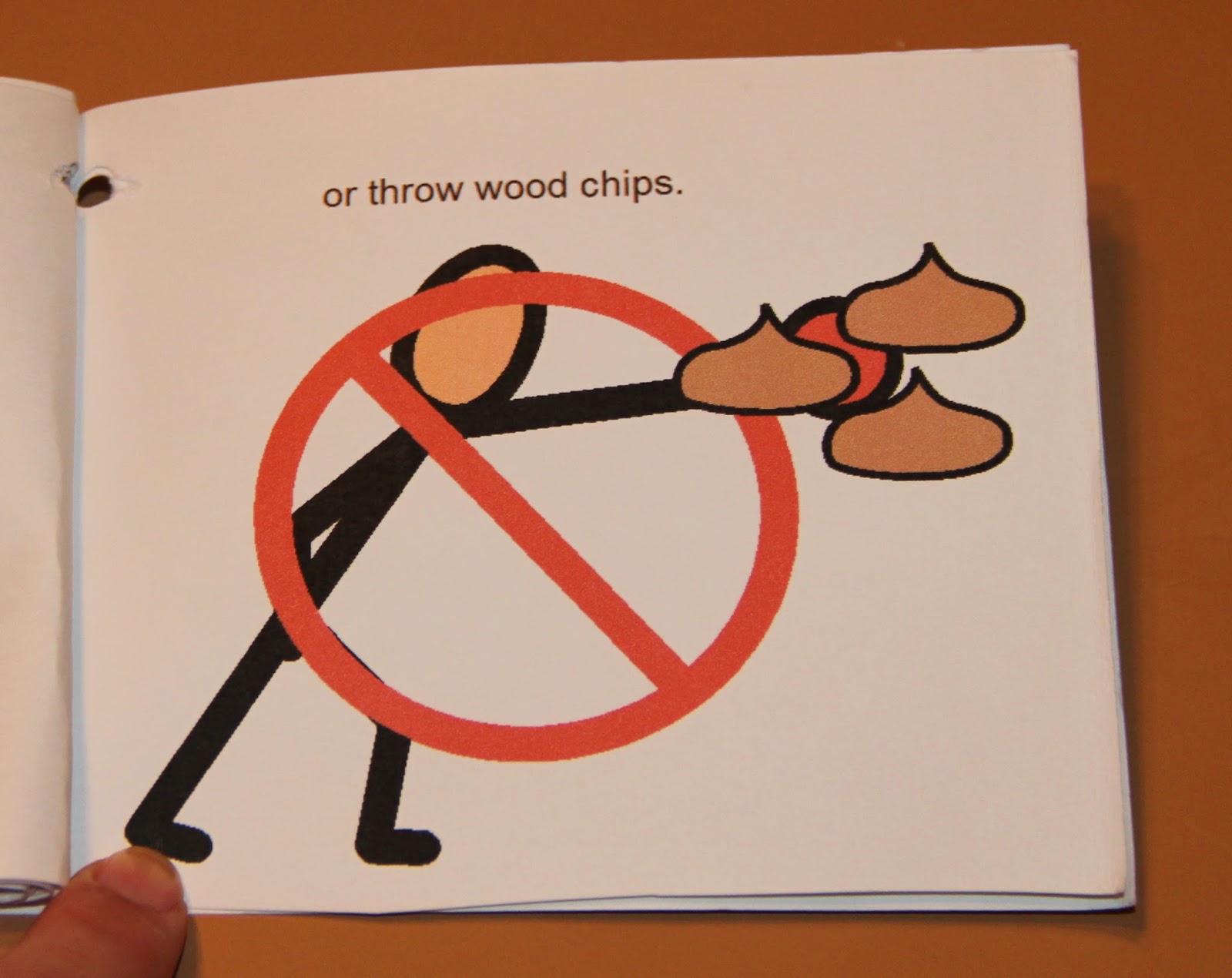
When all the kids are ready to go outside we review the outdoor rules and expectations. 


Note:  Sometimes the rules need to be more specifically taught with visuals of students doing the activities. 


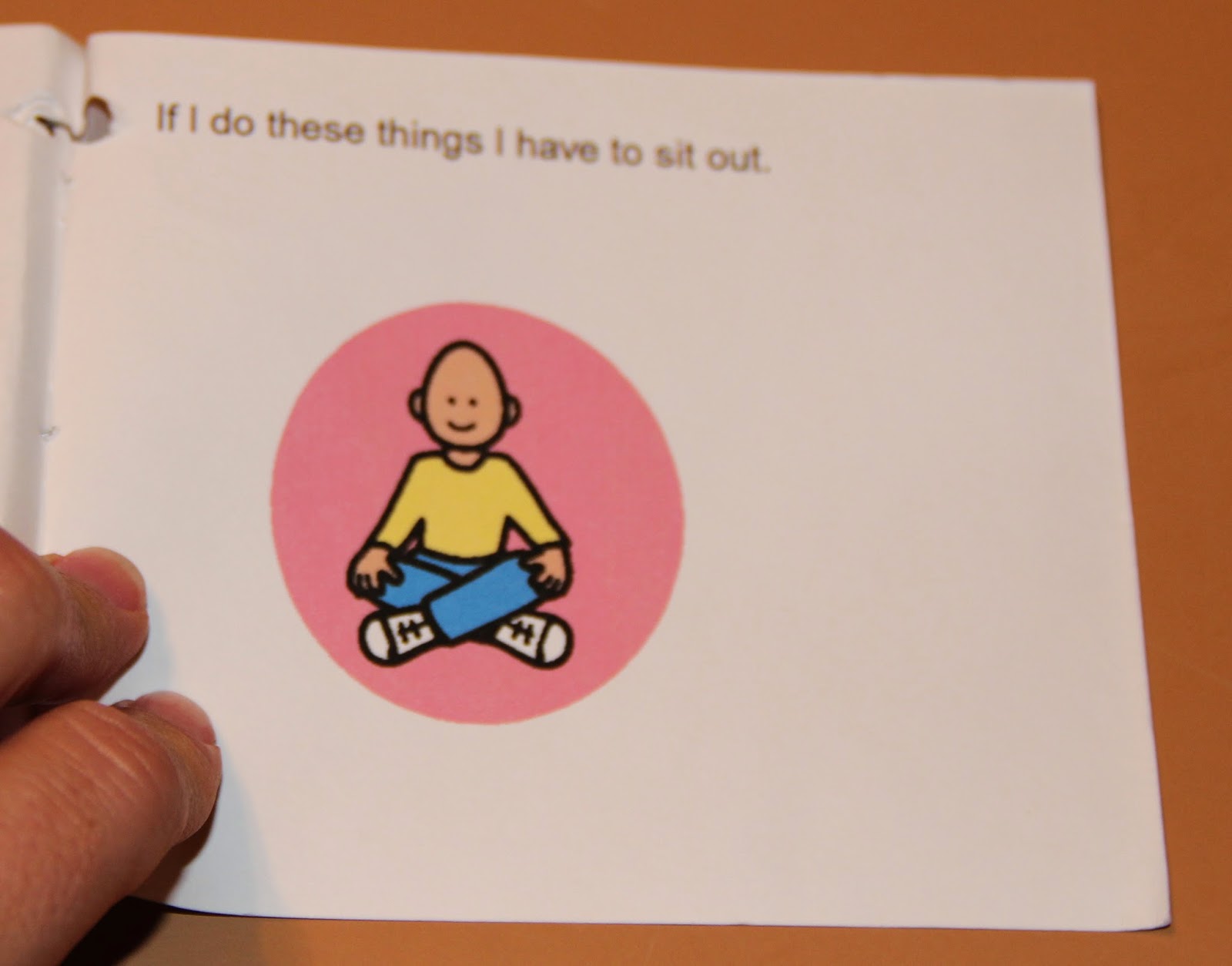
Or with a social narrative to support the students in knowing the rules and what the consequences are for not following the rules.  


 (We simply chalk out a pink circle on the sidewalk for the sit out spot.)

Other times we find it more beneficial to create video examples of what to do/not to do outside. Click below to see a video model that was created to support our kiddos in the ever challenging task of lining up to come inside.  We watched the video while reviewing rules at large group during morning calendar. Then refer to it again on my iPhone or iPad as needed.  


Following the review of the outdoor rules, we get all the students ready for a successful walk to the playground by singing this song to the tune of  Gilligan's Island found on Mrs. Jones' Room blog adapted from work by Dr. Jean.  


Note: We sing the last line "I’m ready to go out!" when we are headed outside. The song is perfect for body awareness and line up expectations.  However if you are like me and never get the tune right, you can record it on a big mac placed by the door so it starts and sounds the same every time. 

Now that we have prepped the kids for a successful outside time, we can head out the door!  We are fortunate to have a preschool playground a short walking distance from our classroom.  The only challenge is that we walk by the elementary playground on the way to our playground.  (I am sure you see some trouble dancing in your head with preschoolers whom are a little overly excited and impulsive.)  

Needless to say after the first week of school, our principal was kind enough to add a paint yellow line to visually help get us all to our playground.  The children also have another (blue) line going through the big kids' playground to dismiss to parents at the end of the day.  


It is amazing the difference these two lines have made for the kids.  Note: the paint was actually just left over yellow and blue paint from grounds department painting the parking lot. 

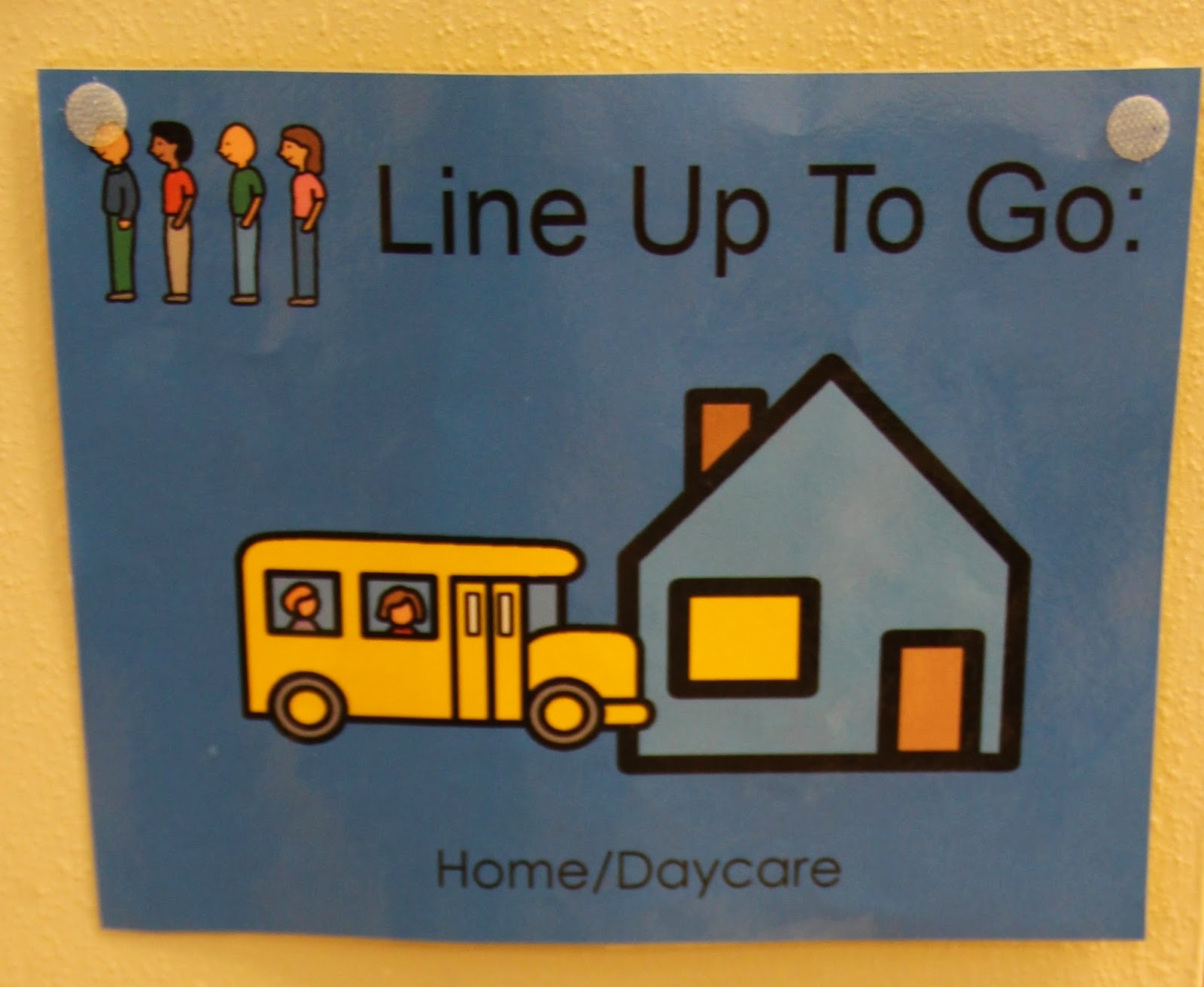
Of course with these added lines came a visual to prep the kids for which line they were going to walk.  


It is simply velcroed to the wall and flips to the other color line when needed.  


We also have a chart to show who is the leader of each line. The pink line is a sidewalk chalk line on the playground where the kids line up to come back inside when the whistle blows. 

(Yep!  We do use a whistle in preschool! It is a great habit to get into since that is what is used on the big kids' playground.)


So after we follow the yellow line to the playground, the students have the flexibility to play on whatever equipment they choose unless they show a need for more structure.  My philosophy is that all kids need down time and outside time is a perfect time to do that if kids can play in a safe and functional manner. 

If, however, they show that they need support to be safe or play in an appropriate way, we will make modifications and add supports. 

For example, one of our little guys would tune out and simply walk along the fence when we were outside so we created this visual to support him in using playground as it was designed. 


Note: After he finishes all five activities on the visual, he could go back to walking the parameter of the playground as he seemed to find comfort in doing so and needed it for downtime.  

The idea is teach new skills and create balance.  We wanted him to experience typical playground activities so he could possibly engage with peers and staff.  By giving him an organized structure to do that, he learned outdoor play skills and eventually played on the equipment without being prompted.   He still does not play on the equipment for significant lengths of time, but has some balance of playing and interacting socially and getting the downtime he needs. 

Another support we added for a little girl was a clipboard schedule with first-then icons.  She loved to swing and would spend the whole time on the swings if we let her so originally we structured it so she had to do something else first and then could go swing.  Later when she was ready for the next step, we created a three choice system in which she had to pick three things to do then she could do her preferred choice that seemed to change from week to week from either walking along the fence or swinging.


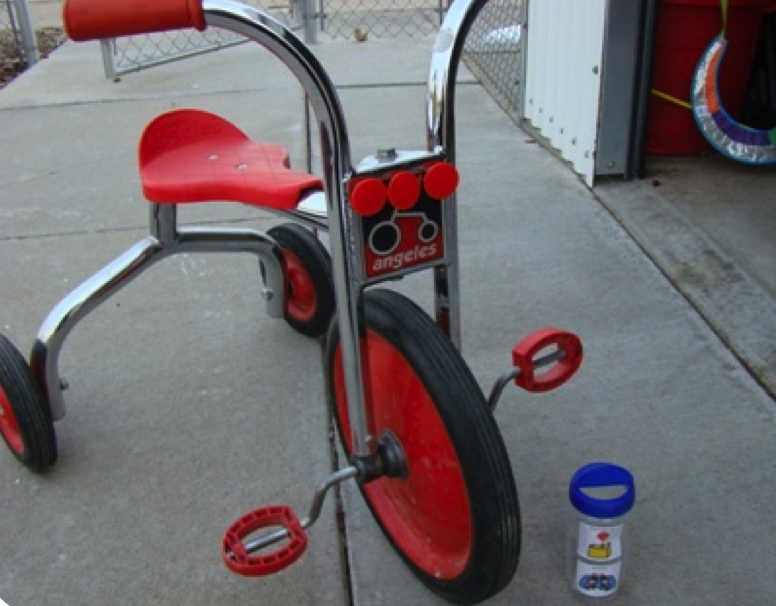
When we started having our little gal do new things like the trikes and sandbox, we had to build in more structures.  For the trikes, we added a token system to show her how many turns she could have as she hated sharing the trikes.  This actually turned out to be a great structure for all the kids.  They could each visually see how many rides around the bike path they got and when they needed to share their trike with friends.   


Note: We had a staff person standing at the start of the bike path to take tokens each time the students went around and facilitate the kids in going the correct direction around the path.

For the sandbox, our little gal had a different problem.  She hated the sandbox and wanted nothing to do with it so we added three sand tools and a bucket.  To start, the expectation was just for her to pick up the sand tools and put them in the bucket. Then as her sensory system got used to touching the sand, she was expected to scoop sand into the bucket three times and then she could be done.  Eventually, we removed the bucket system as she was comfortable to play in the sandbox without the added structure.


One more structure we added to outside was a aided language boards that hung on the storage shed.  These are similiar to the communication systems in the classroom centers and were used to support kids in communicating what they wanted to play with outdoors.  If you look closely you will see two icons for bikes and balls on velcro right inside the shed door. These were great for kids to take off and hand to a teacher like PECS communication to request the bikes or balls.  


Generally speaking, outside time is 15 to 25 minutes depending on the weather and how the rest of our schedule for the day played out.  For our morning kids, we do outside time toward the end of the day as it is typically warmer later in the morning making it more likely that we will get to go outside.   Ideally however, we would do outdoor time more in the middle of our day so the kids can have unstructured downtime to burn off some energy in the middle of the day to make for more focus time in the classroom.  

Finally, while outside we try to have staff spread out so that one person is helping on the swings, one by the equipment, and one by the trikes or sandbox depending on what is out for the day. This is a work in progress as it is in our nature to speak to each other at this point in the day about how the kids did throughout the day or to develop tweaks and restructures that need to be put in place, as well as other adult conversation kinds of things! :)  We really have to be disciplined to do this zoning step. If you would like to try the zoning system and/or support your staff in being more effective at it, I suggest you take a look at this excellent book by McWilliam and Casey.  


That's outside time in a nut shell, folks!! :) Join us next time as we close out our day with end of the day group time!  Until then...Enjoy the outdoors!! 


Playfully Yours,
Lindy

Tuesday, July 15, 2014

Let's Play: Building Play Skills with Special Needs Children


I have always been a huge supporter of teaching children through play.  When I started my career back in Head Start many years ago, playtime was 45 to 60 minutes of our school day, much like it is in most preschool classrooms.  So naturally when I moved into my Early Childhood Special Education classroom, I thought I could do the same, but I was sadly mistaken.   The majority of the students in my special education classroom did not have the skills necessary to play.  That may seem silly to most of us, as play came so naturally when we were children ourselves, but children with a variety of social and communication deficits do not always pick up on the concept of play.

In reflecting on the phenomenon of play, one will find that it takes a great deal of abstract thought, and imitation skills to engage in functional play.  Both of which, are lacking with many of the students in special education preschool classrooms.  If asked to play, they will either stim on a toy that gives them visual feedback such as the propeller on a toy helicopter, or wheels on a match box car or they will engage in repetitive play that is self-soothing such as lining cars up in a specific order or scooping sand through a sifter over and over again. Yet others are at the exploration stage of exploring their environment to the fullest. . . dumping things out, roaming from center to center, or even exploring and messing with things are not toys at all.

So how do we build play skills and train success?   How else, through centers!!! In our classroom, we have three areas that support play and socialization.  One is the social center which was shared in a previous post and the other two are variations on rug play.

Area one is a traditional play area, where the students have free rein to play with a variety of toys on the shelf. 

 
This design is effective for our returning students and students with higher skills.  It is the area we will focus on today.  The main rule of the area is that the students need to play with the items from the shelf on the area rug directly below the shelf. 
 

For many years our rug was a multi-colored preschool circle rug with various shapes on it.  However this past year, I purchased a 6 by 9 foot solid colored area rug.  My personal preference is a solid colored area rugs without designs on it as the design can be highly distracting for kiddos and can be hard for kids with visual impairments to play and walk on. 

What makes the area successful for our students is our concept of less is more.  We only have four to eight different activities on the shelf for the kids to choose from and each activity is limited in the number of items it has especially at the beginning of the year.  For example we may have 20 wooden blocks out rather than the whole set of 80.

To support the students in requesting however I will Velcro an aided language icon on the shelf for students to ask for more if needed.   This supports our nonverbal kids in requesting and reminds all the kids that they have the option to request more. 
 
We also have all done-put in prompts on the insides of each toy tub.  This helps the kids remember to pick up their toys as they finish playing with them.  Remember a visual prompt is always easier to fade than a verbal one! 


One play expert aka, paraprofessional or classroom volunteer is assigned to this center to help facilitate, model and encourage active engagement with toys in the area.  Depending on student levels the kids are here for 10 to 15 minutes.  We never want them to be at a center too long.  We try to stretch their attention span over time but watch it closely because if they are there too long that is when problem behavior starts to occur.  The idea is to structure centers so that they are actively engaged for 10 to 15 minutes at each center and move onto the next activity before their ability to engage decreases.  The more actively engaged students are the less problem behavior will occur.!

NOTE: for students with little attention to task, we added in functional errands between centers or in the middle of centers.  For example, the students may go to the office to check our mailbox or return library books. I will share more about that in the future but for now I wanted to share my top 5 activities items for rug play.  Each one with its own modifications and visual supports.

1.      A Wood Train Set - modified with numbers and color coding so that it makes one complete track.  Remember less is more by having just the pieces needed to make a figure 8 track the kids and staff can put it together in a functional manner and then focus on pretend play with the train and people. 
 
 
Here is a closer look:  You can see the numbers on each track piece.  If you look really closely you will see there is a red permanent marker line online the side of the track that is a visual cue to show the kids that the red stop sign and the red roofed police station go by that track. 
 
 
              We have also taped an aided language board inside the lid of the box so we can support
              and facilitate language as the students request various pieces and track numbers. 


2.      Marble Works– modified with a letter matching system this set can be put together without extra pieces quickly and effectively so that the marbles run through without getting caught up.  This is one of our favorites for turn taking and playing with a group as the game is so fun it caters to the kids playing together.  Of course with some turn taking and sharing lessons from staff! 
 
 
       Here is a closer look at the letter matching system we use to support the students and staff in putting a functional marble game together.  Note:  this does limit the students creativity a bit but it helps them gain functional play skills.  We can always add the creativity piece back in after they get the concept of how to play with a specific toy.  Rather than spinning the wheel on the little yellow piece over and over again, they can watch their marbles go through the maze over and over again like the game is intended to play. 


      This game also has an aided language board taped to the inside of the box's lid so the students can request the letter pieces and marbles. 
 
 
TIP:  For kids that are at the early stages of play we have modified this game to be a task box with just a few pieces.  The kids can work on the skill of top to bottom and starting on the left and end on the right. I got the idea from Task Gallore: Let’s Play .  It is an excellent book for gathering play ideas!


3.      Duplo Legos- modified with step by step books to make lego creations.  Perfect for kids that work well using visual work systems.  They have a visual of what they are making and a step by step process of how to do so. 


              Remember less is more!  
So for some students we will just have the pieces for a particular build set out. 


for others we will have all the pieces that go with our Lego step by step builds
so they have to use their problem solving skills to find what they need. 


And again there is an aided language board taped on the inside of the box lid
 so the kids can request what they want to build. 

 
TIP: the Lego company also has a few step by step sets to build. 
For example the animal build and literacy sets. 
 
4.      Little People Sets- There are all sorts of sets everything from an airport, to a farm, zoo, fire station and house.  We even have some holiday sets that the kids enjoy.  We modify them by adding roads, templates and step by step story books to follow along and facilitate play. 


My favorite is this tablecloth template I made for our barn set and farm unit. 
The kids can work on prepositions as they put animals on the water, in the barn, beside the field, etc. and they can also work on motor skills as they plow the fields following the lines. 


5.     Numbered and Lettered Puzzles- modified with letters or numbers on the back to support the kids in putting them together correctly.  
 
For this activity we often use our number and letter paint sticks to help the kids find the next letter or number.  You can read more about these paint sticks in this previous post. 

I could go on and on with modified play tasks but the main idea is the more structure we can add to activities, the more we uncover the mystery of play for our kids.   You may have noticed that all of the modifications involved letters, numbers, and other pre-academic skills.  And that is no accident, it offers exposure for our students without overwhelming them and also caters to several of our students’ special interests in letters and numbers.  By including their special interests, we can support engagement as the students want to interact because it involves something they enjoy. 

We pull in other special interests whenever we can: cars, trucks, trains, dinosaurs, and animals have been some of the leading special interests over the years!  That being said however, because we are using special interests we have to have a way to set limits when center time is over and it is time to move on.  Especially since our rug play center duals as the large group area.  We do this by velcroing towels over the shelfs.  During centers the towels are rolled up on top of the shelf.  When center time is over the towels lay over the shelf. 
 

Now moving back to the topic of special interests, we do whatever it takes to build student play skills.  For example, this past year one of our students had very limited interest in play, to support her in being successful and help her engage longer than her baseline of 30 seconds, we incorporated her special interest of plastic baggies and her strongest skill of putting in.  She is a little rock star when it comes to put in tasks.  Early on it became her special interest as well as her strength so we used it to our advantage.  In the beginning, we had her do things like put animals ‘in’ the farm set, then we moved on to taking toys out of plastic baggies and giving them to the staff person to put together to make a train track, puzzle, etc. 

Note:  The plastic bags were only used in the presence of an adult and only for the first few weeks.  For whatever reason the student enjoyed the noise and feel of baggies, and with her limited ability and interest to touch things it helped us get past her tactile defensiveness.  She would touch anything once if it was coming out of a plastic bag.  Overtime she realized other things were not so bad to touch and we were able to move on to more functional play skills. 

At this point, some of you might be wondering, what is the point, it seems like a lot of effort to teach play skills why not just work on the pre-academics afterall that is what school is all about . . .

Well, in doing a little research about play you will find that play is the precursor for social and educational success.  You can learn more by accessing my presentation about play and the resources on the last slide of the presentation.  

Teaching play skills, also teaches children how to fill their downtime and what to do for fun and leisure.  Research shows that students with disabilities, especially those on the Autism spectrum are less likely to hold a job later in life.  Not because they can’t do the work but because they do not know what to do during their downtime.  They need support with social skills and how to interact with others in the workforce during breaks, and other social experiences.  Hence the need for teaching play skills at an early age that will lead them to appropriate leisure activities. 

Okay I will get off my soap box now, and say so long!  Come play with us next week as we dive into the rug play center for our beginning students.  Happy Play Time! -Lindy