I recently realized how often I was referring to the
Valentines’ blog hop logo that 27 other bloggers and I linked up to last
month.
It has been the gateway to more tips, strategies, and
freebies for special educators like yourself!So I thought I would save you the trouble of looking for these amazing
tools by listing the 27 special ed bloggers that linked up below.
Today, I am welcoming Ms. Stephanie Kramer as a guest
blogger to discuss a very important topic and one I am not very strong in...DATA COLLECTION! Ms. Kramer has come up
with an excellent method to assess all her students in all developmental areas
three times a year.I could not be more
proud and excited to share this post as Stephanie was my student teacher four
years ago.She is a phenomenal teacher, and wonderful friend & colleague who so passionate in her work with
children.So without further ado, it is
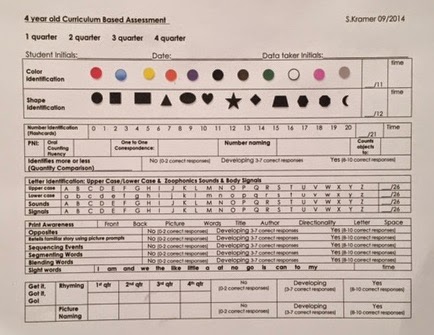
my pleasure to share Ms. Stephanie Kramer’s expertise. As a new teacher, I needed to create a progress monitoring/data collection system that was quick to administer. I wanted it to provide valuable and reliable information that was easily read and understood by parents. I was really fortunate to have many, many resources to work from as I pulled my data collection forms together. I utilized materials from college, the state standards, and various curriculum's that we use: Handwriting Without Tears, Read it Once Again, ZooPhonics, and some aspects of: Creative Curriculum, and High Scope, my Mom, past teachers, co-workers, and anywhere else I get my hands on data collection forms and ideas! Initially all of the many, many documents I collected were very overwhelming, but I slowly began to condense, combine, and reformat the stacks of pages to create an organized system that is teacher, student, and parent friendly. The system works well in our classroom and the best part is it is included in our daily routine. First off, the three and four year old Curriculum Based Assessment (CBA) forms. If I had to select one part of my data collection process that I find most useful, this form would be it!
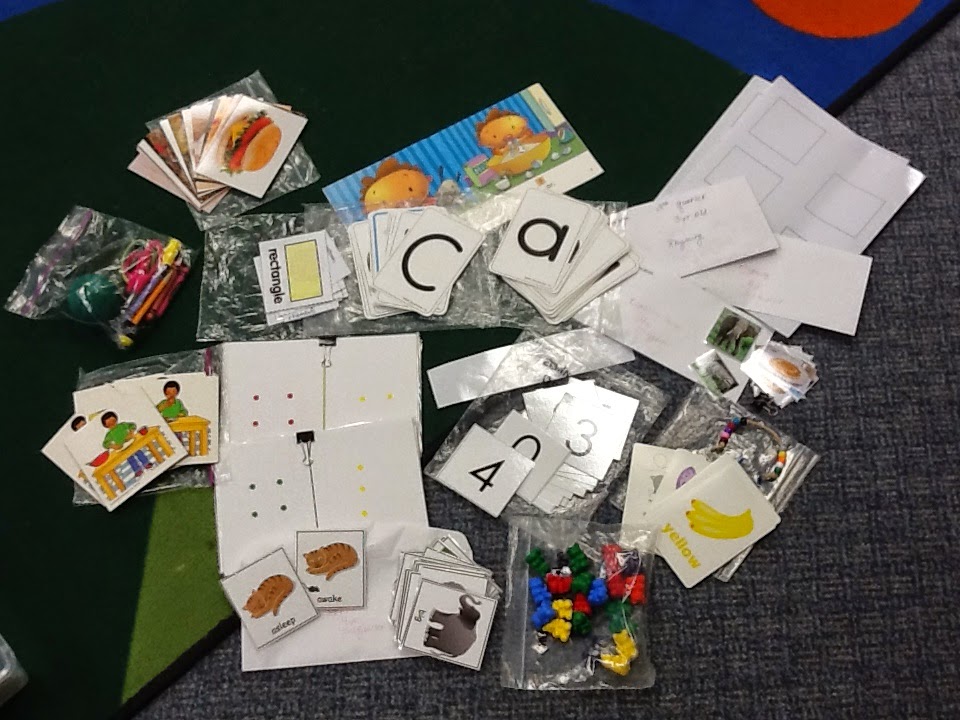
To gather the data needed to complete each 9 week CBA, we have all the items and manipulatives in a small tote. Below you can see what types of items we use.
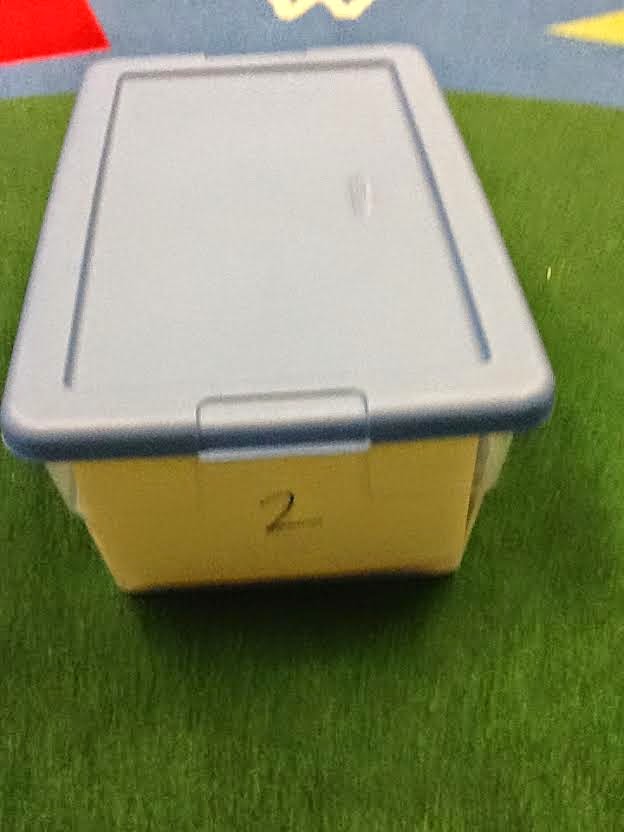
We have a tote for each quarter so that we know the students have generalized the skills and are not learning to the test.
As you may have noticed on the CBA forms, all 4 quarters are listed at the top. We use a new form for each quarter and simply mark which quarter the form is being used for. This allows my staff and I to quickly compare data and note any changes in student performance, making for very parent friendly forms to share during conferences and meetings. The goal is that by the end of the year, students will have been exposed to every concept on the CBA form and current levels of performance would be evident based on the students performance and data collected.
So how do we keep it all organized and provide students with an opportunity to work on target areas on the CBA each day? We have a morning and afternoon class so we use our school colors to designate between classes. The morning class has yellow folders and the afternoon class has blue folders.
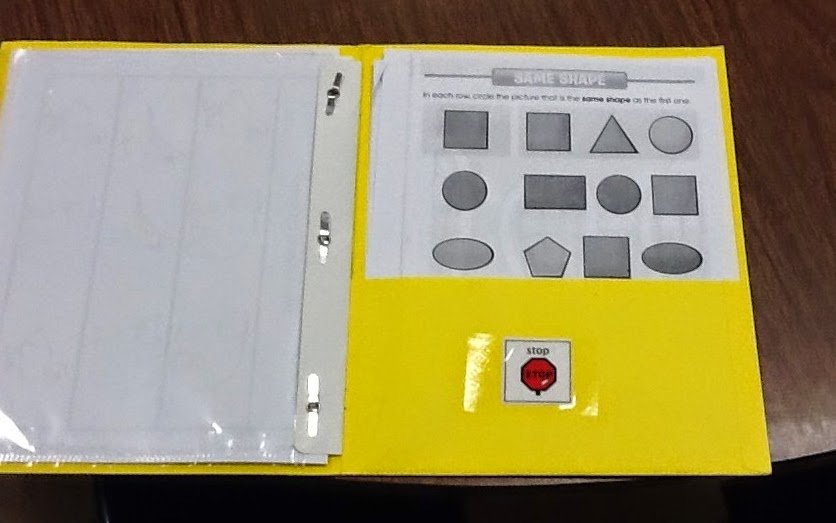
Each folder contains a sheet protector with the pages only the teacher should write on in the sheet protector. These pages are our CBA forms and another set of forms I will get to at the end of this post.
As the students complete their work samples/data collection forms in their data collection folders, we file them into their portfolios so that the data collection folders stay very organized and student friendly. In the page protector section, we also have the following forms to collect data in regard to gross motor, fine motor, personal information, body part recognition, name writing, self- portrait drawing and other specific things we track related to the curriculum and programs our district has choose to adopt.
The front pocket holds pages for the student to work on. They are denoted with a green light as a visual prompt for student to know they need to work on the items in this pocket.
The back pocket is labeled with a stop sign and contains pages that are to be completed within the quarter when a teacher moves them to the front pocket and the students are ready for them. This system has been adapted and modified so that every student in our ECSE classroom participates and does so as independently as possible.
We complete the data collection packet by doing our "folder jobs" as part of our opening routine. With each student's name and/or photo on their folder, the students are responsible for locating their folder and pencil in our pocket chart and then getting to work.
Choice time is the following activity, which proves to be motivational when implemented in conjunction with our classroom behavior management system that encourages students to always do their best. It also provides my staff and I some time to help individual kids when needed while other students move on to choice time. NOTE: Some student worksheets require more one on one time with teachers than others so we'll only place 1 or 2 of those forms in the front pocket each day while other students work on independent forms. We also support students in working on various concept worksheets during arrival job time, small group centers.
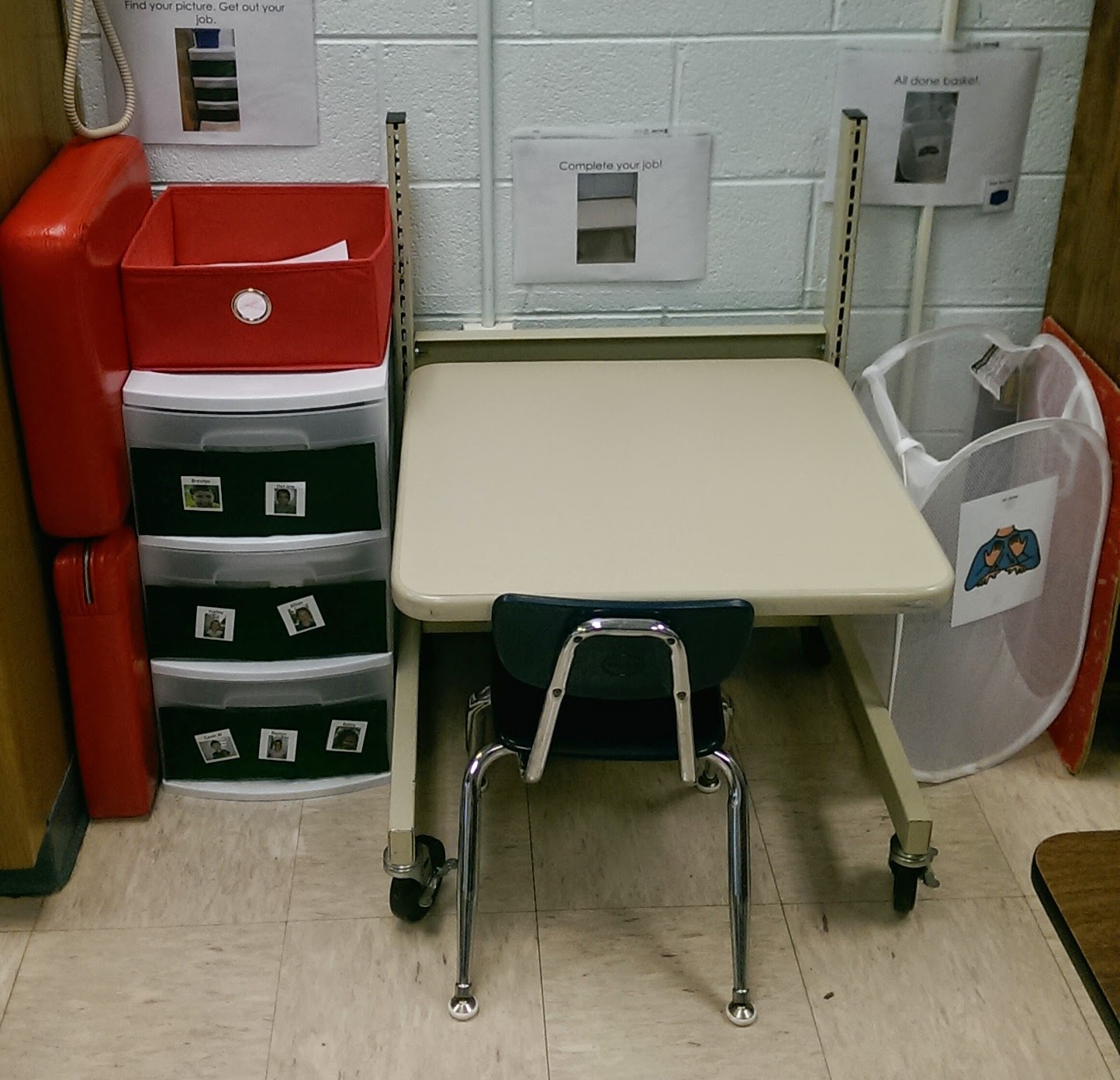
Then as students progress, we incorporate some folder work into our independent work time. Here is what that looks like in the classroom.
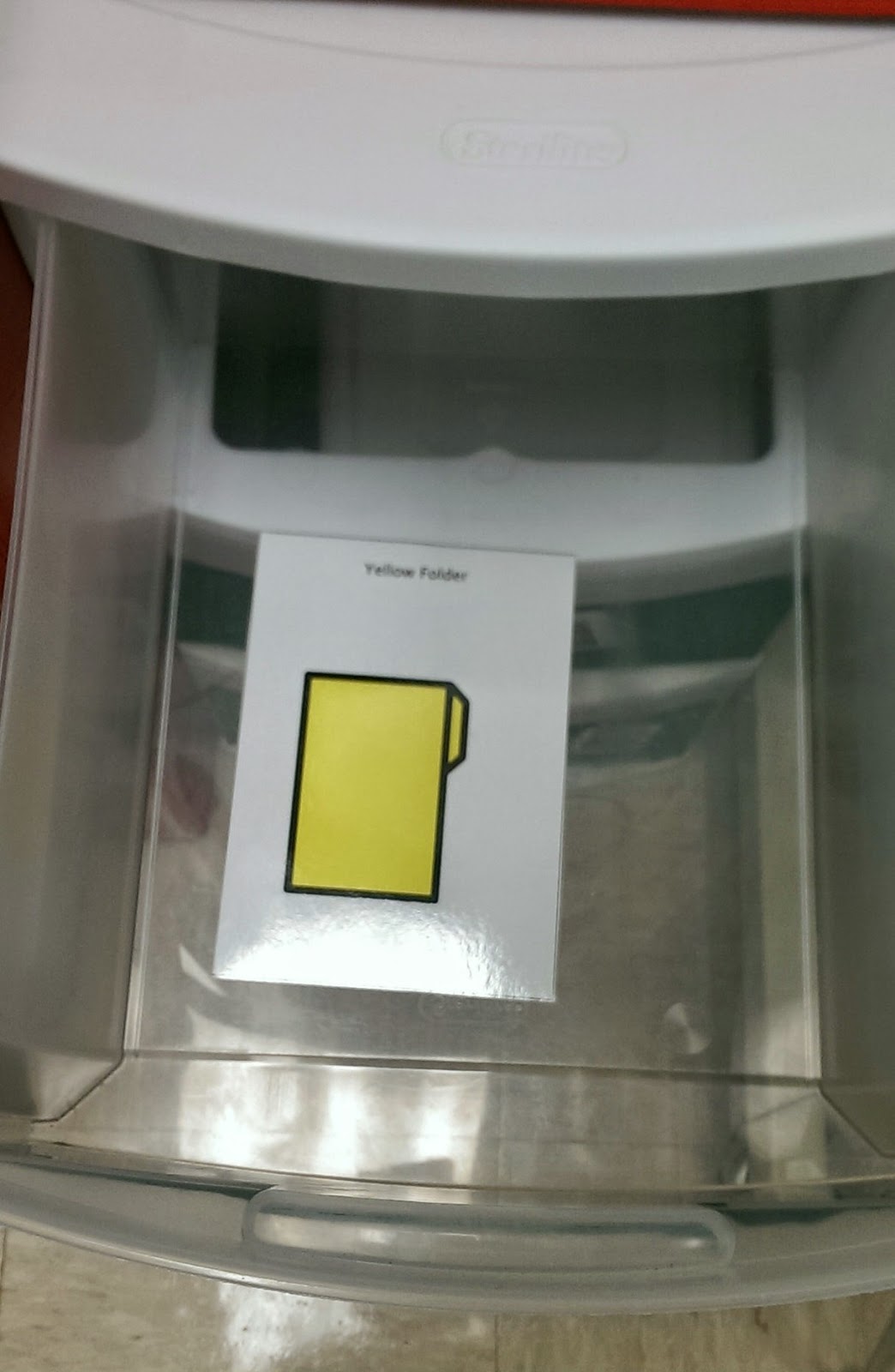
We have 3 drawers that contain a job for each student and if they need to do a folder job, we simply place a photo of a blue or yellow folder in the drawer.
Please feel free to ask me questions about this system at skramer20@gmail.com! I've learned so much from reading blogs, observing, and listening to other professionals. Although this system may not work for you exactly as I've explained, tweak it, make it your own and if you have time share the changes you've made with us. We would love to hear your ideas!
Now if you're still reading this, I'm done rambling. I am incredibly humbled and honored to share my ideas with others and want to leave you with a huge THANK YOU for the infinite and invaluable time, endless dedication, and unrelenting passion you spend preparing and working with young children! I wish you well in your data collection journey!
Hello, Everyone!It is time to say goodbye to our classroom schedule series.As the children come in from outside time, they all find their spot in large group.We then close our day with a daily recap and goodbyes. This is done a few different ways depending on the needs of the students.It changes throughout the year to support novelty and progress.Just think how many behaviors of disengagement would occur if we used the same goodbye process all year.That being said, we do have to have balance.We need to stick with the same goodbye routine long enough for students to understand the pattern and gain skills, but we don’t want it to become predictable and lose student interest.
Therefore, today I will share a few variations on goodbye time. I apologize as they are acted out at our home instead of the classroom but I think you will still get the idea.
Our first version of goodbyes was this goodbye book that encourage waving.
We use construction paper hands attached with a brad to visually show children the waving process. On each page the teacher moves the construction paper hand from side to demonstrate waving.
Originally, we had one large yellow book to share the gross motor movements for each animal in the song. But as certain students struggled with the imitation activity and attending to task, we added a few blue mini-books for those kids to follow along with.
After the Goodbye Ritual Song, each student is called up one at a time to pick the goodbye of his/her choice from the goodbye apron below.
The icons on the apron were ironed after I printed them on t-shirt transfer paper. Following each student's choice, he/she is dismissed to get his/her coat and book bag, and then line up to go home. Note: In all of my goodbye examples, I have the students strategically dismissing after they do something in the front of the group so that their dismissal is staggered and the cubby area does not get to crowded. I say "strategically" because I call kids that have the ability to wait in line longer first while kids whom are better at waiting in their spots get called later. One para waits at the cubbies to help kids get their things to go home and the other sits near the kids at group whom have the hardest time waiting.
Here is a video example of Goodbye Ritual #1. Again, use your imagination as the videos in this post are done in my home with my boys and my husband as the videographer since I no longer have a classroom of my own. :( That being said, I think with a little imagination you will totally get the idea!!
The second version was created last year when we were working on teaching students to notice each other and say goodbye.Each student had a copy of this book.
Note:The children were working on a variety of skills.First, they were learning book handling and literacy skills as they each had their own book to follow along with.Secondly, each page had a colored tape tab to reinforce color recognition and support fine motor skills in turning the pages.Third, they were working on social skills as they found their friends and teachers, and used eye contact, waves, and verbal skills to say goodbye.
One of our students, who struggled with large group activities and looking at books, used this put-in tub with all the students and teachers photographs as her strength and interest was in put-in tasks. It kept her engaged and focused during large group.
Following the book activity, we sang the following goodbye song to each student as the staff modeled saying goodbye and the students learned how to do so. Note the song also works on calling friends and teachers by name and using the appropriate pronoun with names- he/she and his/her.
It's time to say goodbye to Timmy,
It is time to say goodbye to Timmy,
How was his day? How was his day?
He had a ____ day today!
The students then checked out by putting their photo in the tin can that represent how they felt about their day. Did they feel happy, sad, okay, or angry about their day?
Note: We used tin cans for this activity as several of our students enjoyed and were very good at put in tasks. I purchased the tin cans at our local hardware store for $0.99. They are empty paint tins! You can get them in pint and gallon size. We also use them for magnetic games.
Click below to see a video example of Goodbye Ritual #2.
After the students lined up to go home we would sing these words to the tune of "She'll Be Coming Around the Mountain" using early literacy and problem solving skills to add the correct pronouns and people into the song for each child. When the students got used to this version, we then changed it up a little to discuss what type of vehicle the students would be going home in using the magnetic icon below.
Click below to see an video example how Goodbye Ritual #3 works.
Note: A modification you could use if you do not have a magnet door is printing these icons smaller and using a cookie sheet. If you would like either version, send me a message. :)
The fourth version I'll share was created for my afternoon students who were returning from the previous year and needed something a little higher level than the goodbye book. In this example, the students worked on spelling their first or last names depending on their level.
You can access the board for this activity on Boardmaker Achieve or by emailing me. The song is sung to the tune of "She'll Be Coming Around the Mountain". To make for easy storage, I placed this goodbye version in a binder using page protectors. The other side of the binder had the morning classes goodbye waving book.
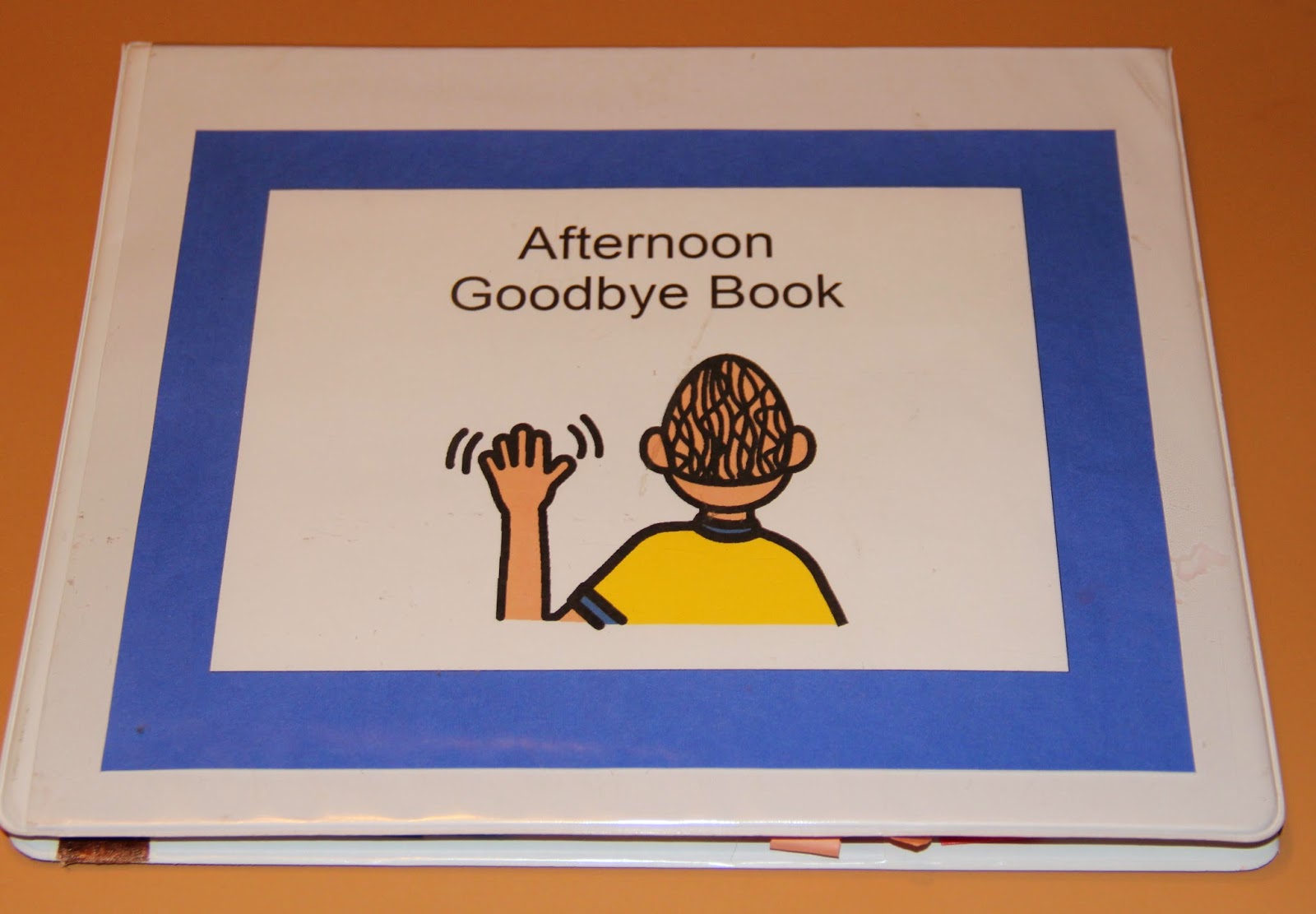
The morning goodbye book was on the front of the binder going vertically and the afternoon goodbye book was on the back going horizontally. Following singing about each student, each student would come up one at a time and check out on an adapted version of a 5 Point Scale by Kari Dunn Buron based on the ideas of Conscious Discipline and the Feeling Buddies.
Click below to see an example of Goodbye Ritual #4.
As the afternoon class matured and made progress, we moved on to other versions of checking out. One was where the students worked throughout the day to earn gold tokens as a class and we then counted the tokens to see if we earned what was in the treasure box at the end of the day. You can see more details about this version by clicking here.
Following the token count, each student signed out at their level using this chart. Some kids wrote the letters of their first name, some put the letters of their name in order, some did a combination of the two and others simply matched letters by color. If they were past working with their first name, we moved them on to their middle and last name.
If you would like a copy of my sign out chart to revamp for your students, let me know!
And last but not least, here is a way I choose to have a K-5 classroom of students say goodbye at a week-long summer school program provided by TASN-ATBS. Throughout the day, the students worked collectively to earn frog tokens. Then at the end of the day, we put them all together and counted them as a class. After seeing how many we earned, each child was responsible for reporting how many they earned using these leveled activities.
Activity 1: (the simplest level) Putting the frog tokens
the class collected in the frog collection jar.
Activity 2: The student reports how he/she feels about getting or not
Activity 3: The student practices reading sight words to say if the class
reached or did not reach their goal. (Their goal was to earn 30 tokens.)
Activity 4: The student reports the exact number of tokens the class earned
by circle the numbers on the chart and then filling then in the box.
Activity 5: The student finds the number the class earned on the 100s chart.
Note that numbers 1 through 29 are red to show the class did not earn
the amount needed for a prize and numbers 30 though 100 are green for go
meaning the students get to open the frog pool with mystery prizes inside.
Activity Six: The student graphs how many tokens were earned on a bar graph
to compare the week's results.
As I mentioned above if the class earned more than 30, they were able to open the frog pool and pick a prize. Usually a choice between two items (bubble gum, fruit snacks, and small candies or party favors). Note: the students do not know what is in the pool each day as there is motivation in the mystery of not knowing what the prize will be for the day!! Each student comes up to report using their leveled activity and then gets to hang it on the chart below and pick their prize for the day (if the tokens were earned for the day). After reporting and picking their prize, they get their belongs and line up for dismissal.
That is it for now... See you later alligator! Until next time, make your goodbyes fun and functional for your students!! Use the time to connect with your students as connecting always pays off. CONNECTION=COOPERATION! As shared by Dr. Becky Bailey, connections on the outside build connections on the inside! Just what we want:)


.jpg)


.jpg)