Showing posts with label Task Box Idea. Show all posts

Monday, April 18, 2016

Lego Work Tasks: for Early Building, Play and Sorting

The post I had planned for today is taking a bit longer to put together than I had anticipated, so I figured what better way to fill the We Teach Sped slot than with a simple work task post!  So here goes. . . Six Building Task!

1. Duplo Lego Build Sorting by Color-


2. Duplo Lego Build Sorting by Size-


NOTE: By attaching rough velcro to the bottom of one lego of each color and size and creating a lego tray with Sterilite Storage Trays, hot glue and soft velcro, you are able to make one task that has multiple ways to build and sort: by color, by size and by color and size!  


Also note by using Duplo Legos you can reach and teach learners who are in the early stages of play and /or have limited fine motor skills.  Duplos are much easier to hold and build with for little hands, however the same task can be made for more mature hands using traditional Legos.

3. Lego Build Sorting by Color


4. Lego Build Sorting by Size


5. Lego Build Sorting by Color and Size


Note for these tasks all you need is a one piece of cardboard, a large lego platform, a bowl or can to put the legos in and a hot glue gun to put them together.  By putting them together the task stays together making it easier for students to organize their work task space.

Also note with the help of the Dollar Bins at Target, the Duplo Lego sorting container can serve another purpose as a building block sort!  I purchased these blocks at the beginning of the school year, so if you can't find them you might check the Dollar Bins when it gets closer to next school year.  When all the back to school goodies are out:)

6. Building Block Sort by Color


That is all for today, 6 easy building tasks at various levels.  
Until Next Time, Happy Building!!
Lindy

Saturday, June 6, 2015

Work Baskets and Fun Actvities for Boys!

I'm Back!  Sorry for my absence, I have been busy with my 'real job' lately.   That being said we have some great things in store for Early Childhood Educators in Kansas for the 2015-2016 school year be watching the TASN-ATBS Facebook page for more details Kansans!

Now on with today's post, what better way to start back up then with some Dollar Tree inspired work tasks and fun activities for boys!  All you need is to purchase the Dollar Tree items in the photo below: an Ultimate Spiderman board book and piggy bank, toy skateboards, 2 3 packs of match box cars, Easter egg cars and black ponytail holders.


Task 1: Spiderman Put In


Task 2: Spiderman Put On
 
 
We like to pretend that the black ponytail holders are spider webs.
A great activity for strengthening little hands:)

Task 3: Car Assembly
 
 
This tasks might be hard to come by the cars are actually Easter eggs. 
Write yourself a note to pick them up next spring. 

Task 4: Superhero Colors
 
 
Print page nine from this free Teachers Pay Teachers product and use scissors, packing tape, cardboard and Velcro to make this work task book.

And now for the activities! 

Activity 1: Skateboard Prepositions
 
 
Print page three and four from this free Teachers Pay Teachers product and place page three in a cardboard box lid. 

Have students push the skateboard across the sheet and then use the aided language board below to help them describe where the skateboard landed.  For example: "The red skateboardstopped behind the pig."  For similar activities for sports lovers click here!

 
Activity 2: Color Car Listening Activity
 
Print the cards on pages five through eight from this Teachers Pay Teachers product
Then use a Velveeta cheese box, scissors, a marker, and black duct tape to make a brown and black garage. 


Next use the cards shown in the examples below as a listening activity.  Read the text on each card without showing the student, then after they put the colored cars in the garage show them the card you read and let them lift the cardboard garage up to see if they listened correctly. 
 
You can do cards with both the black and brown garages to make it more difficult for higher students or even call out the numbers on the cars rather than the colors.


That's it for now!  But if you need a few more oldies but goodies that little boys with love click here:  Sports Sorting and Wiffle Ball Fun!
 
Best wishes! Until next time,
Lindy


Workbasket Wednesday at Autism Classroom News

Wednesday, May 6, 2015

Girlie Tasks for Work Basket Wednesday!

I have to say, I was some what of a giddy little school girl putting this month's tasks and work baskets together. Being the mom of two boys and the teacher of many preschool boys with special needs, it was a dream to shop for 'girlie' things at Dollar Tree!

So without further ado, I give you 4 girlie work basket ideas with 12 task variations.  Just purchase these 7 Dollar Tree items: a pink and purple tea set, fabric pony tail holders, day of the week princess rings, pink and purple party favor rings, a Strawberry Shortcake piggy bank, a foam number princess puzzle and a set of two 5 inches Styrofoam circles--plus plastic heart barrettes that are not pictured.   

 
I added Velcro coins to the pink and purple tea set to create an assembly task that works on matching with one to one correspondence.
 
You can create six variations of this task by adding letters, numbers, shapes or colors using a Vis-à-vis marker or permanent marker to each plate and each cup for matching practice.  TIP: the permanent marker obviously stays on better, if you wish to use permanent you are still able to change out the concepts by cleaning the tea set with oops cleaner or nail polish remover. 
 
 
Next up a simple put in task with Strawberry Shortcake!
 
And 2 variations for Miss Shortcake using pony tail holders, 2 strips of colored felt, and plastic heart barrettes also from Dollar Tree but unfortunately not pictured above in items purchased. 
 
Task one: use fine motor skills to stretch pony tails holders over the canister for Strawberry Shortcake hair.
 
Task two: cut out two strips of felt and stick them in the slit in the top of the canister.  Then have students put barrettes on the felt using fine motor and sorting skills. 
 
 
You can also do a two step direction put in task by having an all done can and the bowl of barrettes.  "close the barrette then put in all done."
 
 
Next up a ring put in--  Either errorless with one bowl of rings and one container for putting in or a sorting put in task with both the pink and purple rings using the color ring labels that you can find on my Teachers Pay Teachers store
 
Variation: add a popsicle stick to the top of the container and have students put on instead of putting  in. 
 
 
Need more?  use the day of the week princess rings and circle Styrofoam for practicing one to one correspondence.
 
Or print the day of the week ring visual, and circle with the days of the week on it from my Teachers Pay Teachers store.  Cut them out and glue the circle to the 5 inch Styrofoam circle. Then have the student assign the rings to the correct day of the week based on the visual.
 
 
For readers, print the visual list to assign the rings to the correct day of the week. 
 
 
And one last activity before I sign off, it is not a work task put instead a fun memory game using the foam numbered princess puzzles, and calling cards from my Teachers Pay Teachers store. Cut the cards out and ask students to put the puzzle piece together in the numbered order you called out. Then turn the card over to the let them to check to see if they were right.  You can watch a video below of my son and I playing the game.  He wants you to be sure to know, he is not a girl though:)


There are a variety of levels in the card set, 3 numbers in order, 4 numbers in order, 3 random numbers and 4 random numbers.   
 
So there you have it, 4 girlie work tasks, with 12 variations-- PLUS a fun memory game!  Be sure to come back next month when I get back in my element and share work baskets and tasks for boys:)
 
But in the meantime, do you have any ideas for making the foam princess puzzle into a work task?  I came up with the fun memory game in lieu of a workbasket because I could think of a good workbasket but I know there has got to be one out there for these cool puzzle pieces.  Please post your ideas below.  (Dollar Tree has boy versions of this puzzle too:)
 
Happy Dollar Tree Shopping and Workbasket Making!
 
-Lindy 


Workbasket Wednesday at Autism Classroom News

Monday, January 12, 2015

Learning the Pronouns: His and Her

Looking for a way to teach your students appropriate pronoun usage? Check out this leveled his/her activity:


All you need to do is collect boy and girl clothing and accessories such as watches, hats, necklaces, barrettes, bracelets, gloves, mittens and shoes.  (Tip: Collect baby clothing items so they fit nicely in your workbox.)


Then make a tub labeled his, him, he with a picture of a boy on it and a tub labeled hers, her, she with a picture of a girl on it.  If you would like you can download this version from my Teachers Pay Teachers store.


Then have your students take turns picking the accessories out of a fabric bag or tote.  I use one of my “take one” fabric bags. "Take one" fabric bag you might ask... It is simply a fabric bag that I labeled "take one" with a permanent marker.


I have several of them, and we use them for a variety of activities.  It gives my staff and I the reminder to use the same prompt "take one" as the students put their hand inside.  Many kids who are impulsive will take a handful out of the bag so it is a learning process if needed I only put one thing in the bag at a time for errorless learning.  NOTE: By using a solid colored fabric bag versus a plastic ziploc bag the students have to pick out an item randomly as they can't see inside the bag and the bag is quiet when students pick an item out.  
After the students pick out an item, I have the students tell me if it is for him or her and put it in the corresponding his or her tub.  To make the activity fun and to facilitate more language I added this simple aided language board


The language board provides the students with a way to say “that is his” or “that is hers” and they can also make comments such as “I like that” or “I don’t like that” we are working on core vocabulary (this, that, his, her, me, you, mine) while at the same time facilitating language.  By having the pictures available for students to point to, they have another means to make sense of language and/or communicate. Click on the video below to see this strategy in  action (NOTE: The video is with my own children, who both have language, but hopefully it will still give you an idea of how the language board works.)  You can also access the language board on teachers pay teachers.  


Another great thing about the his/her game is that I put it in tubs that match the tubs I use for my workbox storage:


This way I can store it with my other work boxes.  


And one more great thing about the task is that it can be used in a variety of ways as a fun small group activity, a direct instruction activity with a teacher, para, or speech pathologist or as an independent work activity.

NOTE: Above is an example of a very concrete activity.  The students are actually feeling, seeing and try on boy and girl accessories.  If your students are ready for a more abstract version of this activity you can access this his/her card sorting activity on teachers pay teachers.  

Print, cut out, and laminate the cards. Then simply have your students sort them into a container with two parts.  (My favorite is a Lean Cuisine dinner tray.)  


I considerate this to be level two of his or her sorting, next I give you level three, two worksheet versions of the same concept.


NOTE: You can use these worksheets with a dry erase marker and page protector as a direct instruction or independent work activity so students can practice the concept several time without making multiple copies. 


Or you could even slide it into the cover of a binder as a slant board.  


Well, that is it for now!  Until next time, happy concept building! She and He will learn a lot:) 
Lindy


Wednesday, March 5, 2014

Natalie's Story: Using Structured Learning Principles in the Home of a Child with Special Needs

With permission from her parents, this week I am sharing the progress of Natalie, a wonderful little girl with Trisomy 4p.  Trisomy 4p is a rare chromosome disorder in which some of the material in one of the body’s 46 chromosomes is duplicated.  Like most other chromosome disorders, this is associated with birth defects, developmental delays and learning difficulties.

For Natalie, the disorder’s effects are significant.  In the early years of life, she struggled with illness and many health complications.  More recently, she has gotten to a place where she is healthy enough to come to school and explore her environment.  With that exploration, there have been a few growing pains. In the beginning, it was just exciting to watch her become mobile and explore her world regardless of what she was exploring...her brother's toys, the refrigerator, pots and pans, the washer and dryer, etc.  But then came the time when limits needed to be set. 

In early December her mom texted me, “Help! Natalie is into everything and even broke the Christmas tree!”  With that text I knew it was time for a house call which turned out to be an amazing opportunity for all of us.   I had never realized how much the structure of the classroom can be adapted to a home to create success until I start working more closely with Natalie’s family and care providers.    

As I reflect back I think when Natalie started school, she realized that there was more to life.  She enjoyed the structure and challenges that school provided. But the transitions from school day to home life presented two very different environments that brought out mischievous behavior at home.  At school, we structured growth opportunities.  At home, Natalie found them on her own like trying to figure out how to open the baby gate to the basement, prying a door knob open, or tearing her brother’s library books.  She was craving structure and challenge.  She actually started to like school so much that she cried when the bus dropped her off at home.

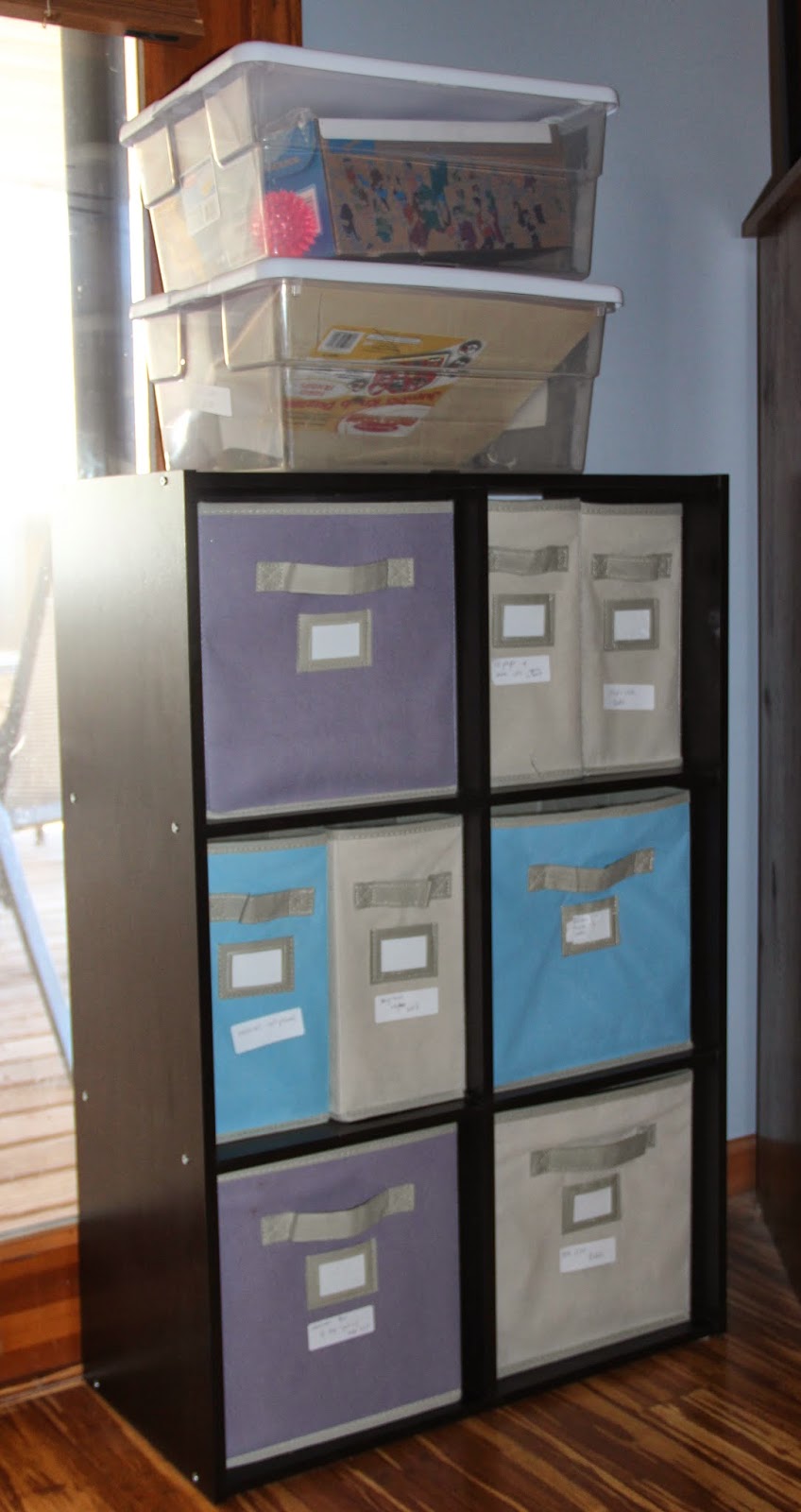
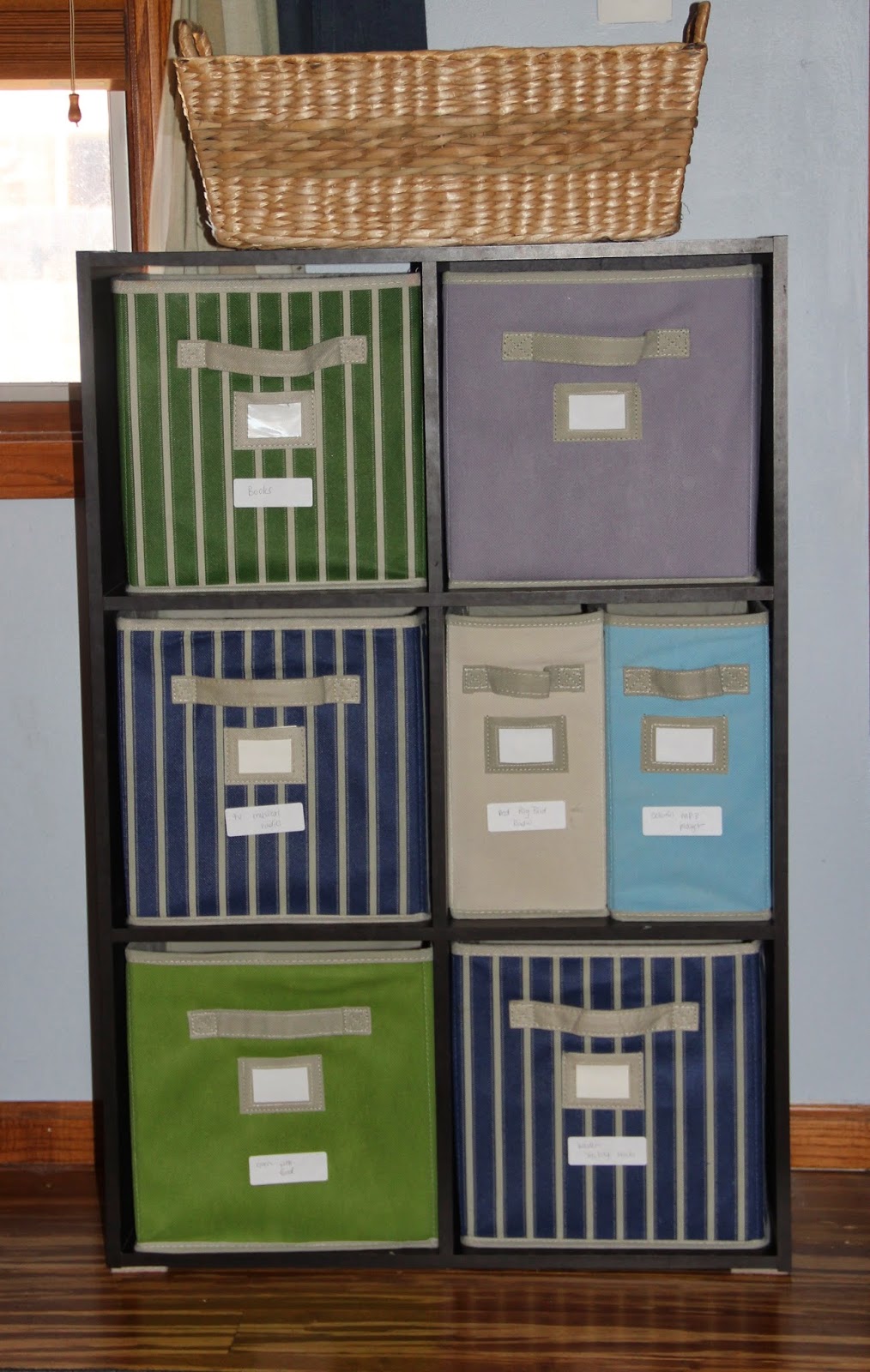
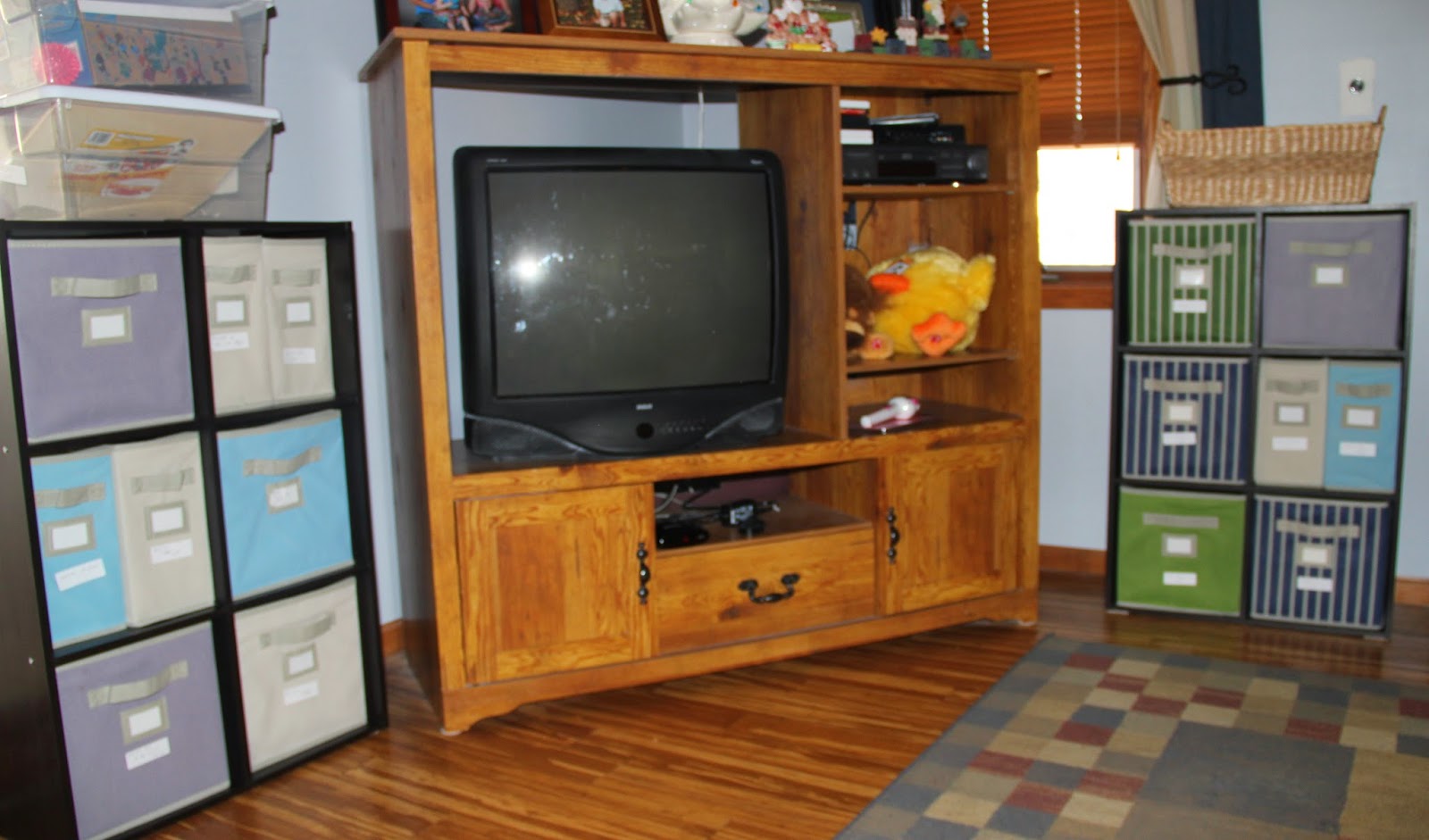
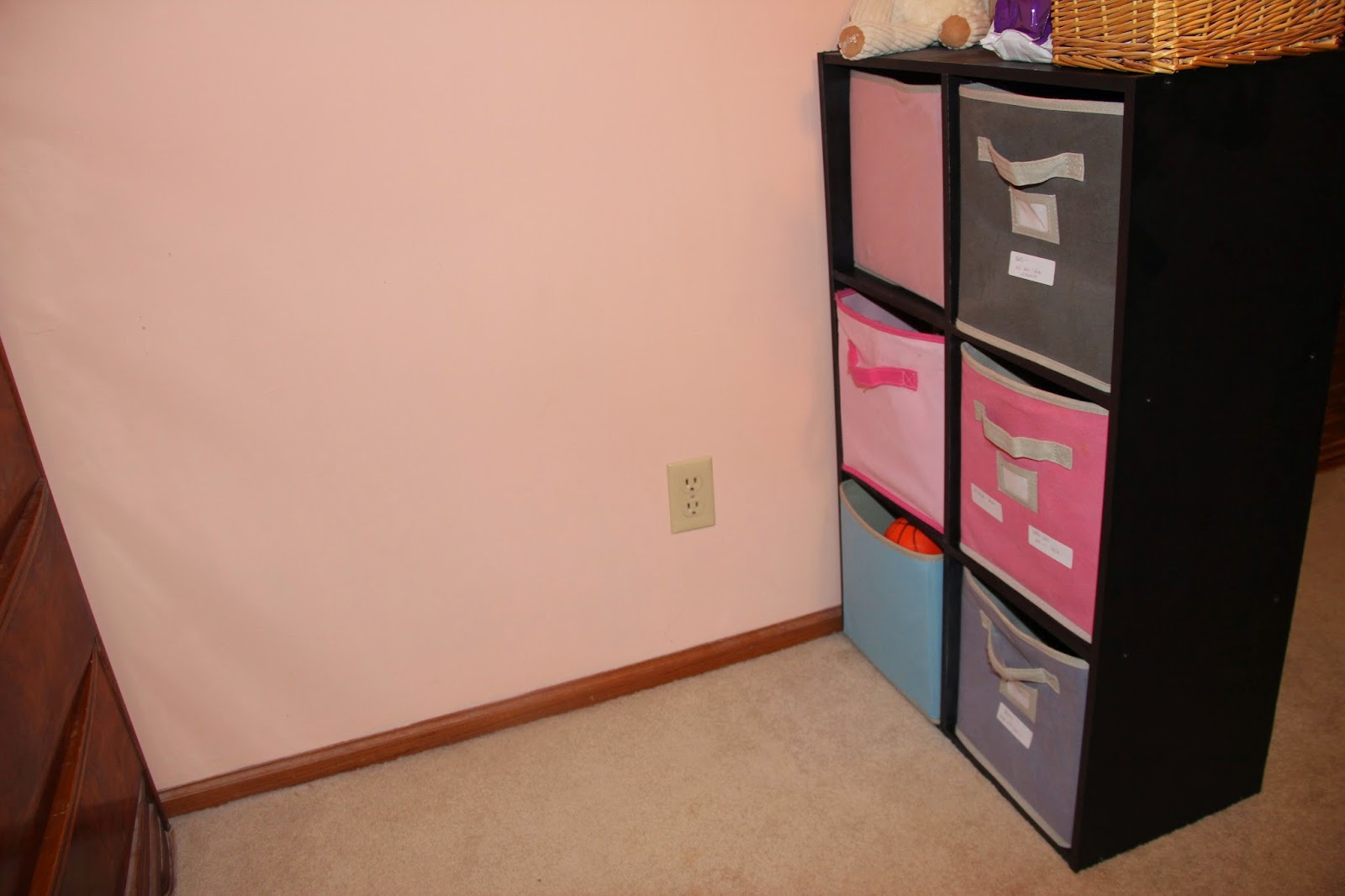
So how did we build structure into her home? Well, HUGE props to her mom, dad, and grandparents for doing just that!  I shared with them a few ideas for structuring her toys and play things.  For the most part, Natalie has never found interest in toys.  She would much rather dig in the kitchen cabinets or get into the refrigerator so we had to come up with a way to make toys interesting to her.  She loves to put in and take out. She has become very proficient at put in tasks.  So her dad simply repurposed the cube shelving that they had in the family room and her bedroom. 


NOTE: Her dad mounted the shelving units to the wall so if she pulls herself up with them they would not fall on her.  

They bought a few extra fabric boxes and then her mom went through the family toys and placed one toy or put in task in each box.  (Notice the new boxes they found at Home Depot.  They are in half sized sections. So exciting for us organization geeks!! :) I purchased some for our literacy center so we can double the amount of leveled boxes we have!)

Here's what the cube boxes look like in Natalie's bedroom.  


Her dad strategically mounted the shelving going out from the wall.  This helps care providers and parents keep her in the space they would like her to play in.  She is much like a toddler in that she likes to leave and explore different rooms.  This blocks her from seeing the door.  It is much like how our social center is set up in the classroom.  (I am hoping to share that center with you soon!)

The systems work like magic!  Her mom even said, “Wow, we should have done this with her brother when he was little.”  It is just good practice for all children.  By organizing their play things, it organizes their play.  For Natalie, it also provides boundaries. When her toys were stored in a large toy box, they were overwhelming to her.  It was much more structured and fun for her to go to the kitchen cabinets and pull out the pots and pans.  Now that her toys are organized, she is more interested in putting in and taking out her toys rather than pots and pans.  Next, we will work on her ability to play and engage with toys for a longer amounts of time.  

Of course, there is some training involved.  At first, Natalie was in the habit of going to things that were off limits. I told her parents and care providers to redirect her to her spaces in the home each time she would try to explore the kitchen or other off limit spaces.  The family also added a hook and eye to the top of the door to her brother’s room and the bathroom so those areas would be off limits unless accompanied by an adult. 

So what’s in the boxes?  Some of her favorites:
The key to success is that the family switches the toys out every two or three weeks so she doesn’t get bored and start engaging in previous behaviors.  Fortunately for Natalie, her family has collected a lot of great toys over the years with the help of grandparents and garage sales.  We also supplement her toys by checking out some of our classroom toys and tasks to her and her family so she can generalize play skills and experience things in both settings. 

The family has become accustom to building put in tasks and other task boxes from things around the house with the help of my trusty resource, "How Do I Teach This Kid?" by Kimberly Henry and the great folks at Task Galore.  Natalie's favorites work on increasing her skill level.  Here are some examples.

Counting Bear Put In 


Notice that I hot glued craft foam on the top of the put in container so that students can’t put in and dump out.  They can only put in. 

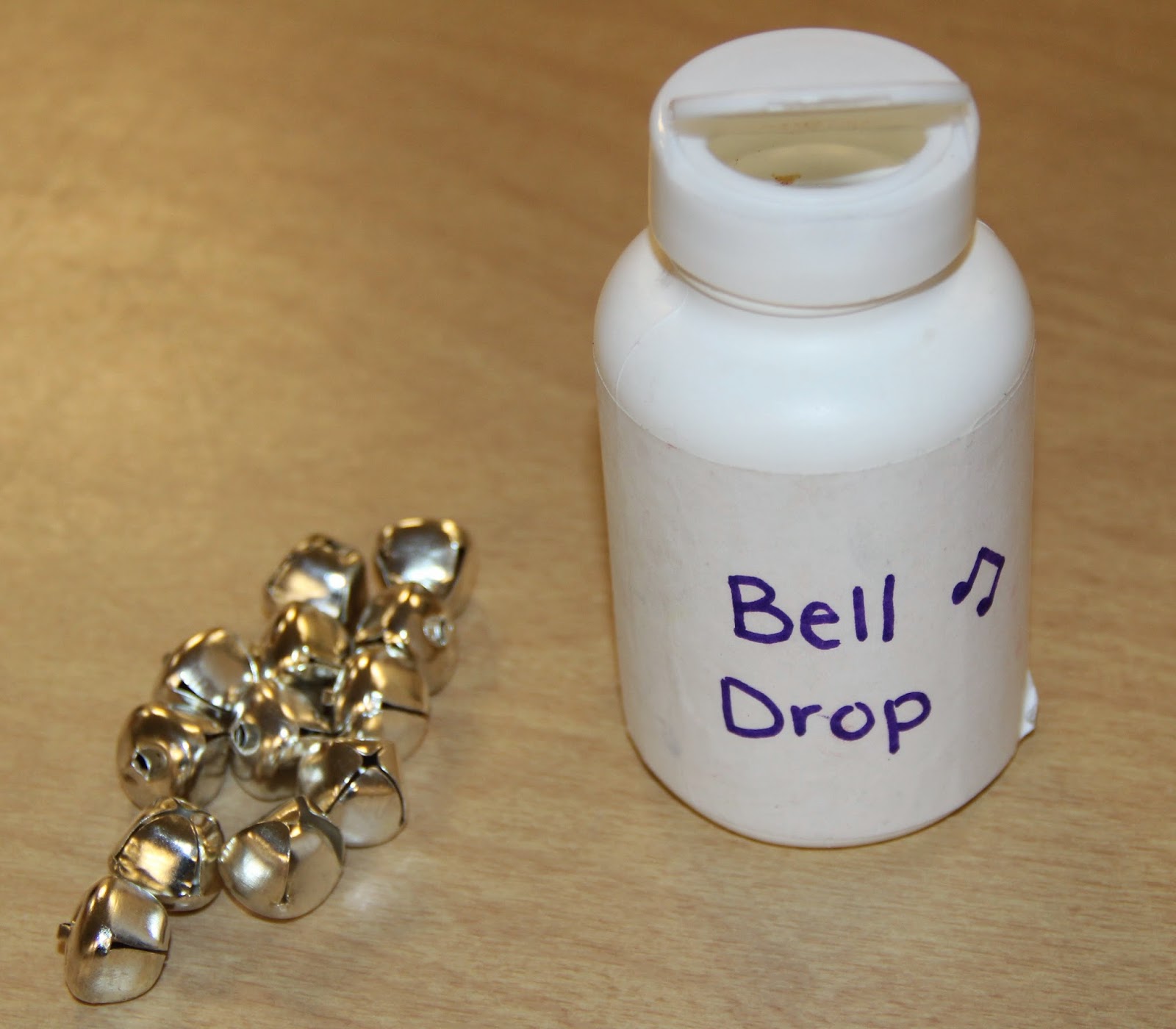
Bell Put In


This task includes its own reinforcement as Natalie loves the bells making noise as she puts them in. 

Golf Tee Push In


This task has the added element of pushing in rather than just putting in. 

CD Put On 


This task is a step up from put in as it's put on instead. 

String Bead Take Off/Put In 


This task works on two-step directions:  1. Take off and 2. Put on.

Bead Put In   


The bead put in was something we added to desensitize Natalie to putting things on.  She resists putting on bracelets, necklaces and more importantly stocking caps and her prescription glasses.  By taking an activity she likes and is successful at (Put In) and using parts of beaded necklaces as the put in materials she has become less resistant to necklaces. Now, we can work toward her putting on other things.  She now wears beaded necklaces, bracelets and stocking caps for short periods and tolerates holding her glasses.  She used to scream and bang her head each time I presented her with her glasses.  It is all a work in progress, but wow, we are proud of her progress so far!!  

Other advances we are making with Natalie is in relation to direct instruction at home and school.  You can click here to see what direct instruction looks like at school. At home, her parents created a small work space near their dining room. Here is the table she works at. 


Typically, the chair in this work space is a Rifton chair This is not to hold her in or confine her but rather to help her sit up properly and become more attentive.

To the left side of her table, her parents have repurposed a wooden chest to hold all of Natalie’s tasks. 


Inside there are a variety of task boxes organized in plastic bins. Natalie’s mom shared that the only thing they purchased for this area was the plastic shoe box containers.  The rest of it is simply stuff they have saved and accumulated from their house and her grandparents’ houses.  And such a wonderful job they have done with it!!! Way to go!!! It looks awesome and really serves as a great learning space for Natalie. It helps fill her day with appropriate learning and exploring activities.

And with that, I must share the next step for Natalie.  In the video clip below, you will see Natalie using her teaching area to learn to communicate in an appropriate manner.  Since Natalie is nonverbal, one of her biggest struggles is finding ways communicate and express herself.  Two of the main ways she communicates is by banging her head and/or screaming and crying.  Both of which, we would like to shape into more effective communication techniques.  Over time she has learned if I bang my head someone will come and help me or redirect me.  The current forms of communication provide her with the attention she is seeking.  

So as a team we have come up with an alternate plan when she bangs her head.  We do not give her verbal attention or eye contact. We simply put our hand in the space she is banging so it is a softer surface but direct our attention to something else that is going on the room so she does not get attention for the head banging.  This was a technique I learned from the training I did regarding Applied Behavior Analysis with Jill Koertner and her K-Cart team. 

Like you all know, this technique alone will not curb the behavior. We have to teach a new skill.  The skill we are teaching is for Natalie to learn to communicate her need for attention and/or help by using a come here button 


Here are the video clips showing Natalie’s speech therapist, Andrea Carmichael, and I during a home visit teaching the come here button to Natalie’s mom and home nurse.  Because they were recorded during a collaborative home visit you will hear Natalie’s team and I brainstorming how the button should work.  I am hoping the brainstorming you will here will be helpful as you watch it and not be a distraction to seeing what Natalie is learning and doing. 


It is definitely a work in progress at school and home. We have incorporated the big come here button as well as a device with four buttons that have come here, all done, and help on them.   


The fourth button is strategically left blank.  When Natalie pushes it, nothing happens helping her to realize that each button has meaning and the blank button doesn’t get her anything.  This is especially important in the teaching phase of the device so we can see if she is just pushing to push or if she is pushing for purposeful communication.

A big thank you to Natalie and her family for sharing Natalie’s progress with the Considerate Classroom Family.  As a special education teacher once shared with me, the journey is a marathon not a sprint.  As Natalie grows & matures, additions, adaptations and changes to her systems will be made to best meet her needs.  She is truly an amazing little girl. A miracle who has overcome so much!!! I see so much potential in Natalie especially with the love and dedication of her parents, brother and grandparents.  She is so blessed to have such wonderful family support and nursing care.   

And my blessing is to have the opportunity to work them.  I have learned so much from them and truly admire the love and dedication they have for each other.  Natalie has taught me so much.  Her family’s willingness to let me come into their home and strategize and plan with them has been an amazing opportunity.  I have learned to celebrate all gains...big or small.  There's no doubt that Natalie came into my life to remind me to appreciate each moment and all that I have. 

I have the utmost respect for all parents raising special needs children.  Parenting is such a hard job especially when the job is intensified by special needs.  In my experience, there are often so many questions for these parents: Where do I turn? What do I do? Who can help?. It changes your life in more ways than can be identified or counted.  My hope, as a special education teacher, is that I can be the support you need and share what I have been blessed to have learned from others.