Now that we are a few weeks into school and things are starting to come together, I want to share a few functional classroom jobs that have been added to our classroom this year!
I have always had classroom jobs but this year I have added a few new ones to the list since I am now working with students from Kindergarten to Fifth grade all day versus preschool students half of a day. (To see previous posts regarding my preschool jobs click these links: Arrival Jobs, Snack Jobs)
As Dr. Becky Bailey shares through Conscious Discipline, it is important that students have jobs that contribute to something bigger than themselves and this is even more important when working with special needs students. Often times students with disabilities are the receivers of help rather than the givers. By giving students with special needs meaningful jobs they can contribute and begin to realize that they matter!
Let's take a look at a few jobs in our classroom that do just that!
Menu Helper- Students look at the monthly lunch menu and copy what is for lunch on the chalkboard.
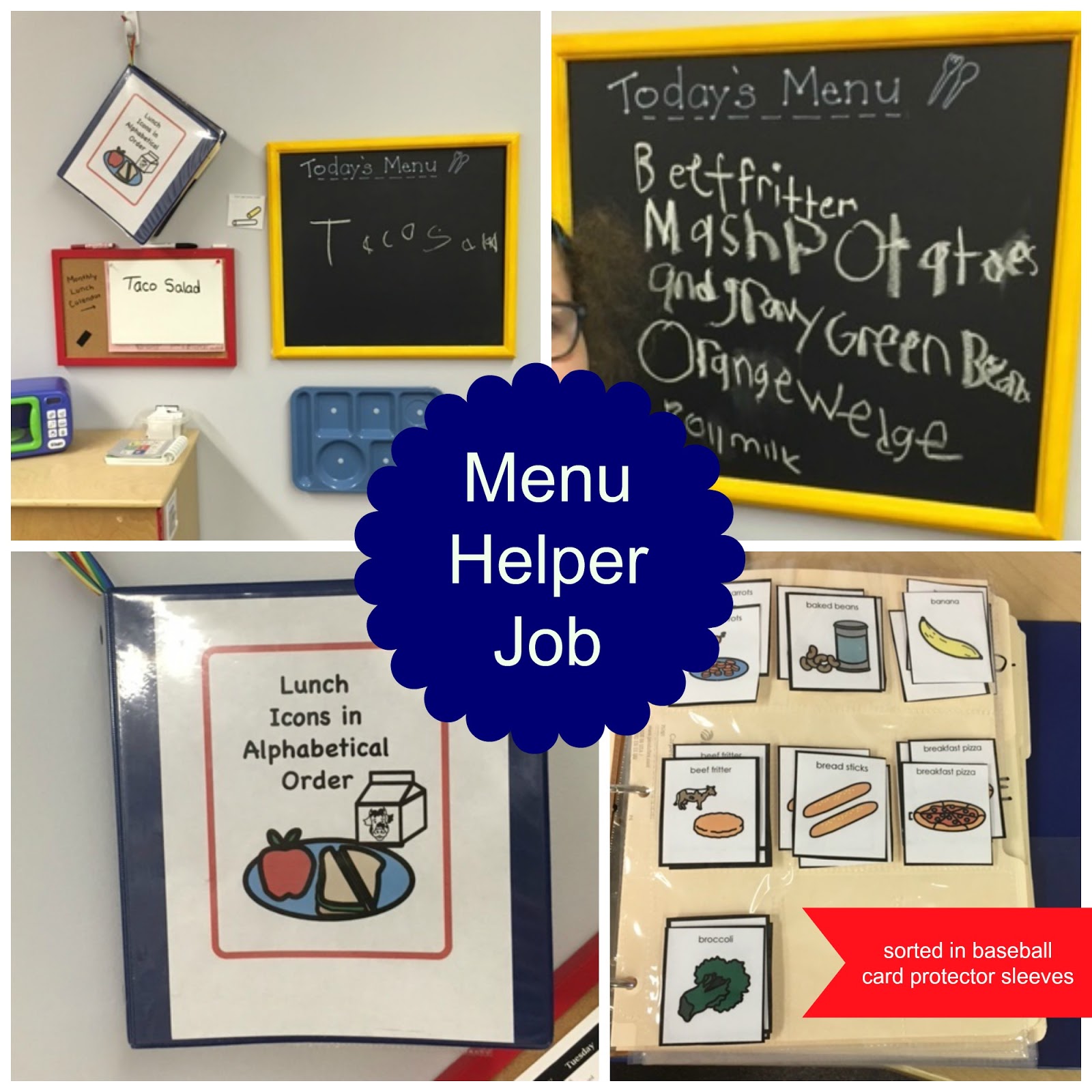
NOTE: If a student has the skill of writing and copying but cannot write the entire menu for the day. We will have them simply copy the main dish or a few items from a white board list.
Students that don't have the skill of writing, simply find the icons for what is for lunch in our alphabetized lunch icon binder and velcro them on a lunch tray that is mounted to our wall with removable mounting tape.
Quote Helper- Students put up the quote of the day on our window facing the hallway. Higher students google search for a quote or look through quote books to find one they like and then write it on a white board and clip it on the clipboard in the hall.
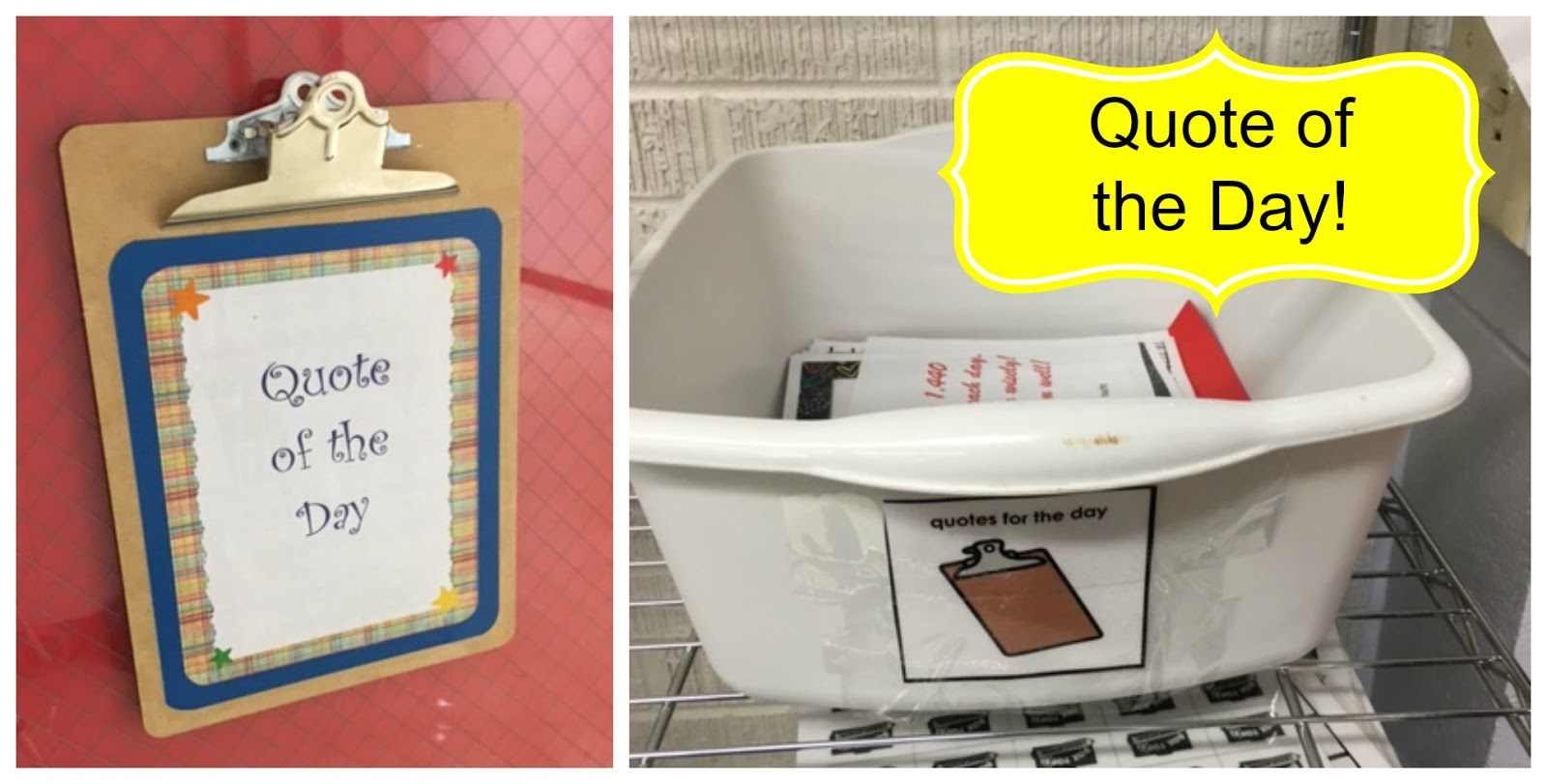
Students who do not have the skill of searching the internet or a book for information, simply pick a laminated quote out of our quote of the day tub and clip it to the clipboard.
Box Top Counter- Students check our class mailbox for any boxtops and pop tabs that other classrooms have delivered to us.
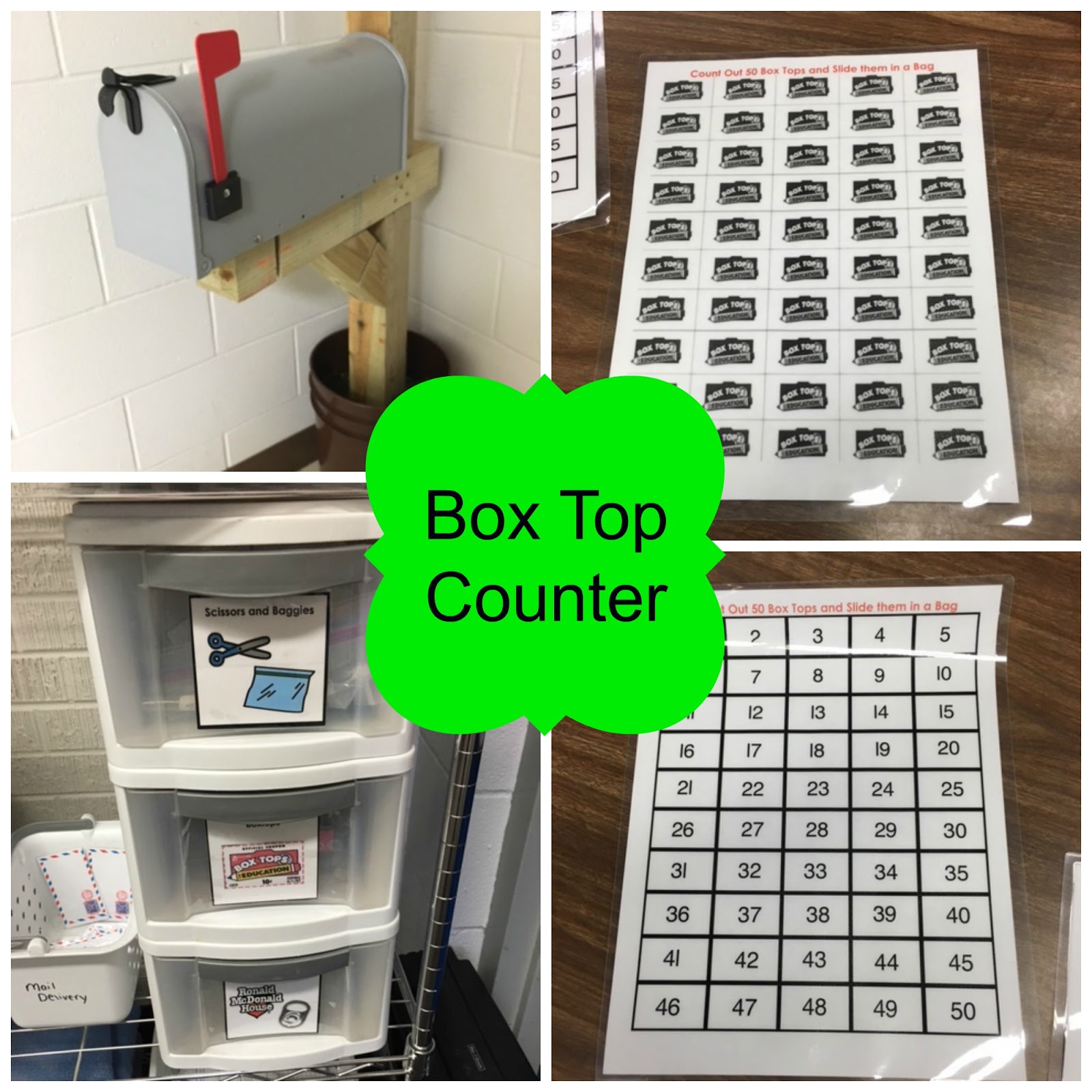
Then they get the supplies they need off our errand shelf to sort, cut out and count boxtops into sets of 50 so they can be submitted to Box Tops for Education for money!!
For this activity some students match up 50 boxtops on a box top template for one to one correspondence practice, others practice counting 1 to 50 using a number chart and other student who are practicing money match each box tops to dime icons and then total the amount of money the class made.
After counting box tops into sets of 50 the students bag them and deliver them back to the classrooms that 'mailed' them to us, which provides an opportunity for students with special needs to show the contributions they make to our school!
Until next time strive to find meaningful jobs for ALL students! And remember everyone has something to contribute to our classrooms, our schools and society as a whole:)
Best wishes, Lindy
Showing posts with label Conscious Discipline. Show all posts
Friday, September 16, 2016
Friday, November 14, 2014
Supporting Transitions with a Ready Not Ready Visual
Greetings, Everyone!
It has been a little over a week since my last post...and wow, have I gotten smarter!! Last week, I was in Dallas at NAEYC. Despite the lost luggage, the conference was amazing. I learned more
than I could have ever imagined.
First off, I had the opportunity to present with Jenny Spencer.
What a wonderful experience! You definitely need to check out her blog, Ignite Learning. The confidence she had in me and her positive energy re'ignited', my love for Conscious Discipline.
Which leads me to the second opportunity NAEYC provided me, getting to reunite with Dr. Becky Bailey, the creator of Conscious Discipline.
Her presence alone reminded me of why I went
into education in the first place...to make a difference in the lives of
children, families and staff.
In speaking with her, I created a revamp to a post I did in
February 2013 and one I shared during our presentation at NAEYC, the ready-not
ready visual. I added conscious language
to support staff in consistently helping students with transitions using the
visual.
Transitions can be very hard for children. At which time, they tend to be in the brainstem with limited verbal communication. By teaching
a student to communicate “I am not ready” the student is more likely to communicate his/her need for more time without hitting, kicking, biting, etc.
So here is how it works:
One minute before it is time for a student who has a difficulty transitioning, set a
one-minute timer, take a deep breath and prepare your student by saying “One more
minute then it is time for . .” as you set up this table tent.
Then when the timer goes off, take three deep breaths, open
the table tent and say “all done it is time for. . . are you ready or not
ready.”
If the student pulls the not ready icon and/or says not ready, celebrate this appropriate communication by saying “Good for you, you said you are ready." or "good for you, you said you are not ready, you may have one more minute.” Then reset the timer and set the table tent up without putting the not ready icon back in.
When the timer goes off the second time, take three deep breaths and say
”all done time for...” This time the
not ready icon is not an option as it is time to set the limits. Your student may still be reluctant to
transitioning but the idea is that you are supporting them in making a
transition and self-regulating as you give them the words to say they are not
ready the first time and then helping them through the transition process the second
time as you set the limits and tell the student it is time to
transition, using empathy and positive intent.
“It is time for... This is hard for you. You feel sad. How can I help you?”
Then turn the visual support to the back so the student can
communicate his/her needs and/or you can help them communicate his/her needs.
For example, with this visual a student could request help
or a break or you could communicate “This is hard, do you need a break? Hug?
Deep Breath?” as you model the visuals use.
I love the addition of the conscious language but please do not feel obligated to use this specific language. It is just words to get you started. A big thank you to Dr. Becky Bailey for suggesting this tweak! Looking forward to hearing how this conscious language helps your students and staff.
Click hereto print the document and get started! Believe me..."YOU ARE READY!"
Best wishes,
Lindy
Lindy
Subscribe to:
Posts (Atom)


